By Dr Ryizan Nizar MD, MRCP UK (Diabetes and Endocrinology), CCT
Last updated 9 June 2026
Why Blood Pressure Fluctuates
Blood pressure changes throughout the day. Learn common reasons readings fluctuate, how to measure more accurately, and when patterns deserve medical follow-up.
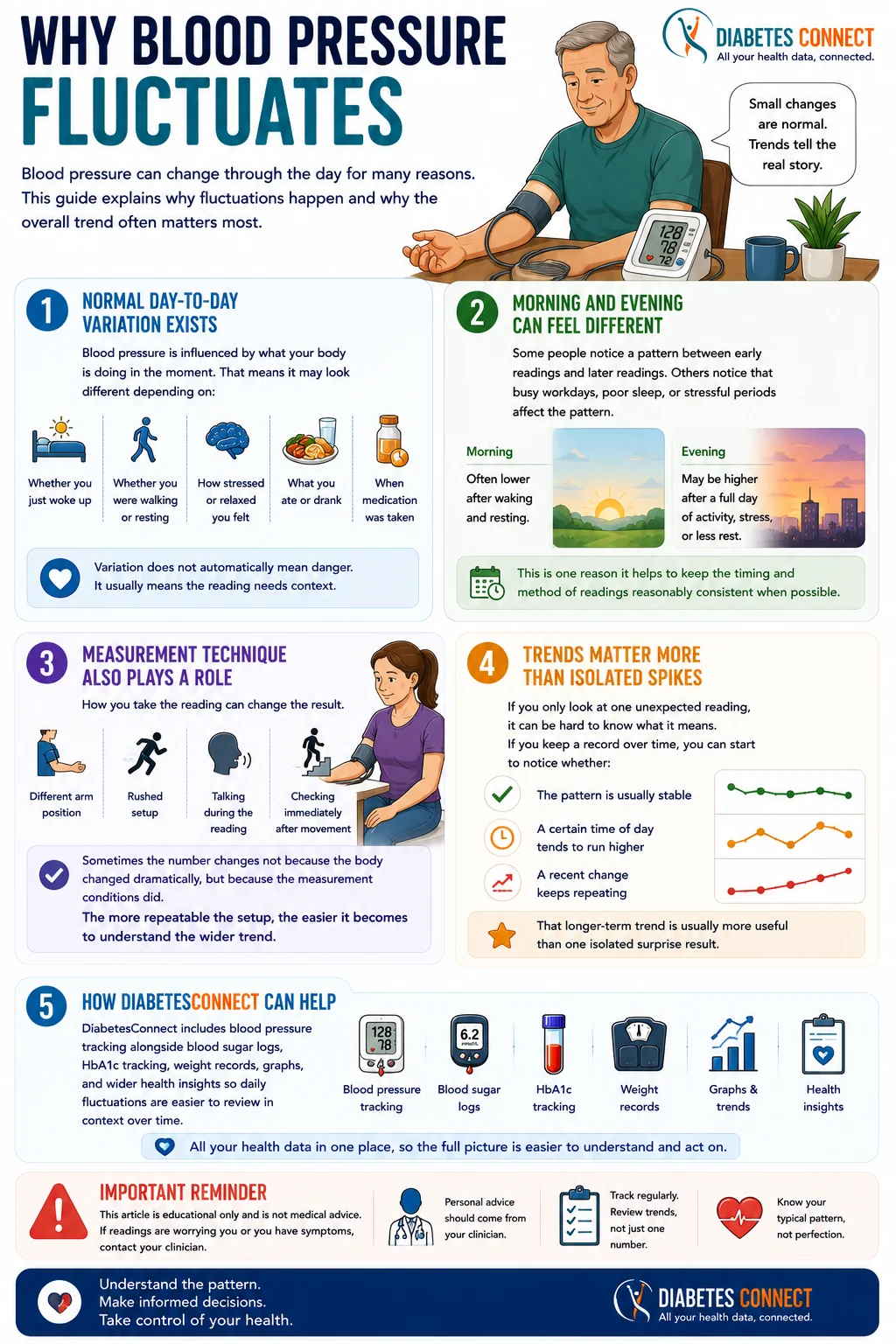
Blood pressure rarely stays exactly the same all day.
A higher or lower reading is often explained by timing, stress, activity, caffeine, sleep, or how the reading was taken. The key is not to overreact to one number and not to ignore a pattern that keeps showing up.
Some fluctuation is normal
Blood pressure changes from hour to hour because your body is constantly adjusting.
Common reasons include:
- recent movement or exercise
- stress, anxiety, pain, or poor sleep
- caffeine, nicotine, alcohol, or a meal
- dehydration
- time of day
- when blood pressure medicine was taken
That is why one reading does not tell the whole story. Context matters.
The reading may change because the setup changed
Technique affects the number more than many people realize.
A reading can come out higher if you:
- check right after walking upstairs
- talk during the measurement
- sit with feet crossed
- hold the arm too low or too high
- use the wrong cuff size
- take a reading while stressed or rushing
A better approach: sit quietly for 5 minutes, keep your back supported, feet flat, arm supported at heart level, and avoid talking until the reading is done.
Patterns matter more than isolated spikes
One unusual result is common. Repeated results in the same direction are more useful.
Look for patterns like:
- readings that are usually higher in the morning
- numbers that rise on stressful workdays
- values that stay elevated for several days
- a new change after illness, weight change, or a routine change
This is where tracking helps. Logging blood pressure with time and notes makes it easier to see whether a result was a one-off or part of a trend. In DiabetesConnect, you can track blood pressure alongside weight, blood sugar, and HbA1c to view changes in context instead of as isolated numbers.
How to get more useful readings at home
If your numbers seem inconsistent, focus on consistency before assuming something is wrong.
Try this:
- Measure around the same times each day.
- Rest first instead of checking immediately after activity.
- Use the same arm unless your clinician told you otherwise.
- Take 2 readings, 1 minute apart, and record both if your device allows it.
- Add a short note if something likely affected the result, like stress, caffeine, or poor sleep.
This gives you cleaner data and makes follow-up conversations much easier.
When to contact your clinician
Blood pressure fluctuation is common, but some situations deserve medical follow-up.
Check in with your clinician if:
- home readings are repeatedly higher or lower than usual
- the numbers have changed for more than a few days without a clear reason
- you often get very different readings despite careful technique
- you feel dizzy, faint, short of breath, have chest pain, or severe headache
If you have severe symptoms or feel acutely unwell, seek urgent medical care.
Takeaway
Blood pressure naturally moves up and down. What matters most is how you measure it and whether a pattern keeps repeating.
Use a consistent routine, track readings over time, and pay attention to trends rather than one surprising number.
Part of guide
Blood Pressure Guide
Find clear guides on blood pressure ranges, home checks, patterns over time, and why blood pressure matters in diabetes.
Open topic hubMake the next step easier
Keep the useful bits from this guide in one place.
Track meals, blood sugar, weight, and diabetes trends together so your notes are easier to understand at the next appointment.