By Dr Ryizan Nizar MD, MRCP UK (Diabetes and Endocrinology), CCT
Last updated 9 June 2026
Blood Pressure Trends Over Time: What to Watch and Why It Matters
Learn how to track blood pressure trends over time, what patterns matter, and why repeat readings are more useful than reacting to one number.
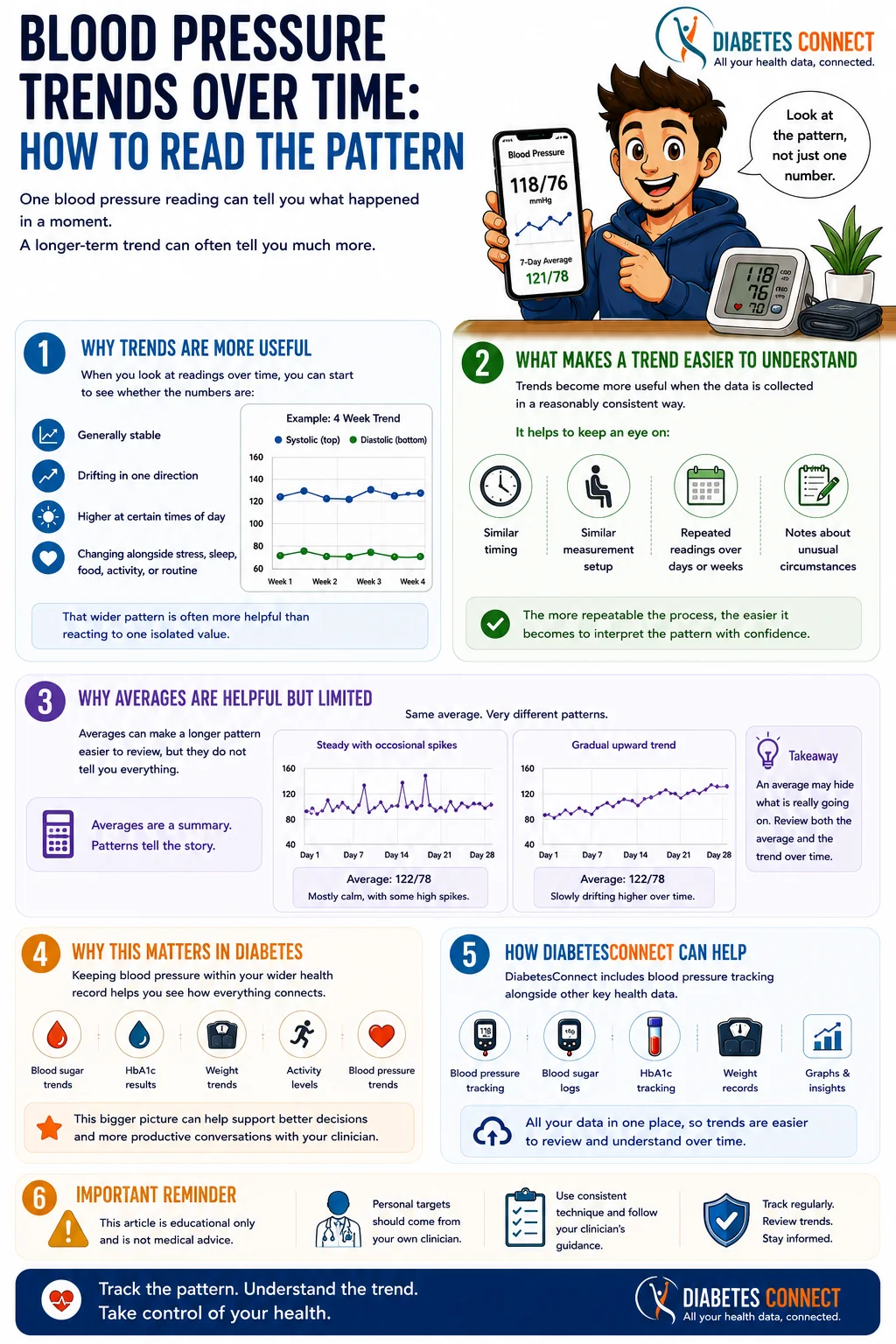
A single blood pressure reading is just one moment.
A trend shows the bigger picture.
That matters because blood pressure naturally changes through the day. Looking at readings over time helps you spot whether your numbers are mostly steady, slowly rising, or changing under certain conditions.
Why trends matter more than one reading
One number can be influenced by stress, pain, poor sleep, caffeine, exercise, or even rushing to take the measurement.
A trend is more useful because it helps answer practical questions:
- Are your readings usually in the same range?
- Are morning numbers higher than evening ones?
- Are numbers gradually increasing over weeks?
- Do stress, missed sleep, activity, or routine changes seem to affect them?
This is usually more helpful than reacting to one unexpected result.
Understanding the numbers
Blood pressure has two numbers:
- Systolic pressure: the top number, when the heart pumps blood
- Diastolic pressure: the bottom number, when the heart relaxes between beats
For many people with diabetes, a commonly discussed target is around:
- below 130/80 mmHg
Targets can vary depending on age, other health conditions, side effects, and individual circumstances, so your personal goal should come from your clinician.
The important question is usually not just “what was one reading?” but “what does the pattern show?”
How to make your blood pressure log easier to trust
A trend only helps if the readings are reasonably consistent.
Try to measure under similar conditions when possible:
- at about the same time of day
- after sitting quietly for a few minutes
- with the cuff placed the same way each time
- using the same device
- with a quick note if something unusual happened
Those notes matter. Poor sleep, illness, a stressful day, or exercise right before checking can help explain a reading that looks out of place.
What patterns are worth noticing
You do not need to analyze every small change. Look for patterns that repeat.
Useful things to notice include:
- readings that are mostly stable
- repeated readings above your target range
- a gradual upward or downward drift
- numbers that are consistently higher at certain times
- large swings from one reading to the next
- changes that appear alongside weight, activity, blood sugar, or sleep
This is where tracking becomes more practical than memory.
When numbers are recorded and shown in graphs, trends are easier to review clearly.
Averages help, but they can hide the story
An average can be useful for a quick summary.
But averages do not show whether your readings are:
- mostly steady with a few spikes
- frequently variable
- slowly trending upward
That is why both the overall trend and the individual readings matter.
The average gives the headline. The pattern gives the context.
Why blood pressure trends matter in diabetes
If you live with diabetes, blood pressure is part of the broader picture of cardiometabolic health.
It is usually more useful to view it alongside other health markers such as:
- blood sugar readings
- HbA1c
- weight trends
- activity levels
- medication routines
Changes across several markers often tell a clearer story than one number alone.
How DiabetesConnect can help
DiabetesConnect helps keep your blood pressure information together with your wider diabetes records.
You can track:
- blood pressure readings
- blood pressure graphs and trends
- averages over time
- blood glucose readings
- HbA1c results
- weight changes
- medication tracking and reminders
- activity and health insights
Keeping these records together makes it easier to review long-term patterns instead of trying to piece everything together from memory.
Doctor note
Home blood pressure readings are often most useful when they are collected consistently over days and weeks, not judged one by one in isolation.
If your readings are repeatedly higher than expected, or if they change significantly from your usual pattern, bring your log to your clinician.
A clear trend is often more useful than trying to remember a few recent numbers.
Takeaway
The goal is not to chase one perfect blood pressure reading.
The goal is to understand your usual pattern.
Measure consistently, look for repeated trends rather than one-off changes, and review blood pressure alongside your other health information when possible.
Important reminder
This article is educational only and is not medical advice. Blood pressure targets and treatment decisions should always be discussed with your own clinician.
Part of guide
Blood Pressure Guide
Find clear guides on blood pressure ranges, home checks, patterns over time, and why blood pressure matters in diabetes.
Open topic hubMake the next step easier
Keep the useful bits from this guide in one place.
Track meals, blood sugar, weight, and diabetes trends together so your notes are easier to understand at the next appointment.