By Dr Ryizan Nizar MD, MRCP UK (Diabetes and Endocrinology), CCT
Last updated 25 May 2026
Blood Pressure Ranges Explained
A careful guide to what blood pressure ranges are trying to describe, and why repeated trends usually matter more than one isolated reading.
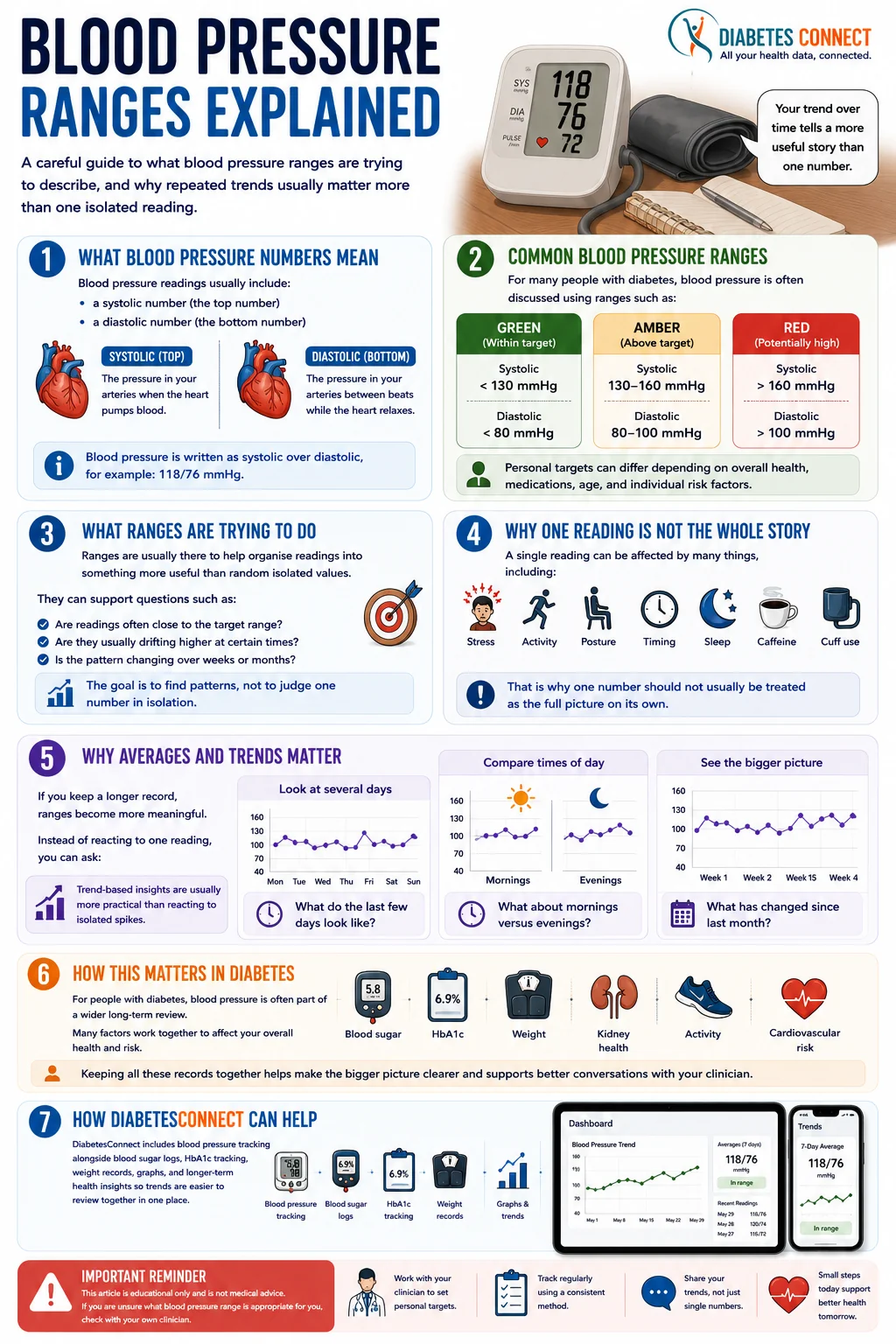
Blood pressure ranges are often used as a way to describe whether readings are lower, higher, or closer to the target you have been given.
The important part is not to become fixated on one number without context.
What blood pressure numbers mean
Blood pressure readings usually include:
- a systolic number (the top number)
- a diastolic number (the bottom number)
The systolic pressure reflects the pressure when the heart pumps blood. The diastolic pressure reflects the pressure between beats while the heart relaxes.
Common blood pressure ranges
For many people with diabetes, blood pressure is often discussed using ranges such as:
- Green:
- systolic less than 130 mmHg
- diastolic less than 80 mmHg
- Amber:
- systolic 130–160 mmHg
- diastolic 80–100 mmHg
- Red:
- systolic greater than 160 mmHg
- diastolic greater than 100 mmHg
Personal targets can differ depending on overall health, medications, age, and individual risk factors.
What ranges are trying to do
Ranges are usually there to help organise readings into something more useful than random isolated values.
They can support questions such as:
- are readings often close to the target range?
- are they usually drifting higher at certain times?
- is the pattern changing over weeks or months?
Why one reading is not the whole story
A single reading can be affected by stress, activity, posture, timing, sleep, caffeine, or how the cuff was used.
That is why one number should not usually be treated as the full picture on its own.
Why averages and trends matter
If you keep a longer record, ranges become more meaningful.
Instead of reacting to one reading, you can ask:
- what do the last few days look like?
- what about mornings versus evenings?
- what has changed since last month?
That trend-based approach is often more practical than focusing on isolated spikes.
How this matters in diabetes
For people with diabetes, blood pressure is often part of a wider long-term review.
Blood sugar, HbA1c, weight, kidney health, activity, and cardiovascular risk may all help make the bigger picture clearer.
That is one reason record-keeping matters.
How DiabetesConnect can help
DiabetesConnect includes blood pressure tracking alongside blood sugar logs, HbA1c tracking, weight records, graphs, and longer-term health insights so trends are easier to review together in one place.
Important reminder
This article is educational only and is not medical advice. If you are unsure what blood pressure range is appropriate for you, check with your own clinician.
Part of guide
Blood Pressure Guide
Find clear guides on blood pressure ranges, home checks, patterns over time, and why blood pressure matters in diabetes.
Open topic hubMake the next step easier
Keep the useful bits from this guide in one place.
Track meals, blood sugar, weight, and diabetes trends together so your notes are easier to understand at the next appointment.