By Dr Ryizan Nizar MD, MRCP UK (Diabetes and Endocrinology), CCT
Last updated 9 June 2026
How to Measure Blood Pressure Correctly at Home
Learn how to measure blood pressure correctly at home, avoid common mistakes, and track readings in a way that makes trends easier to understand.
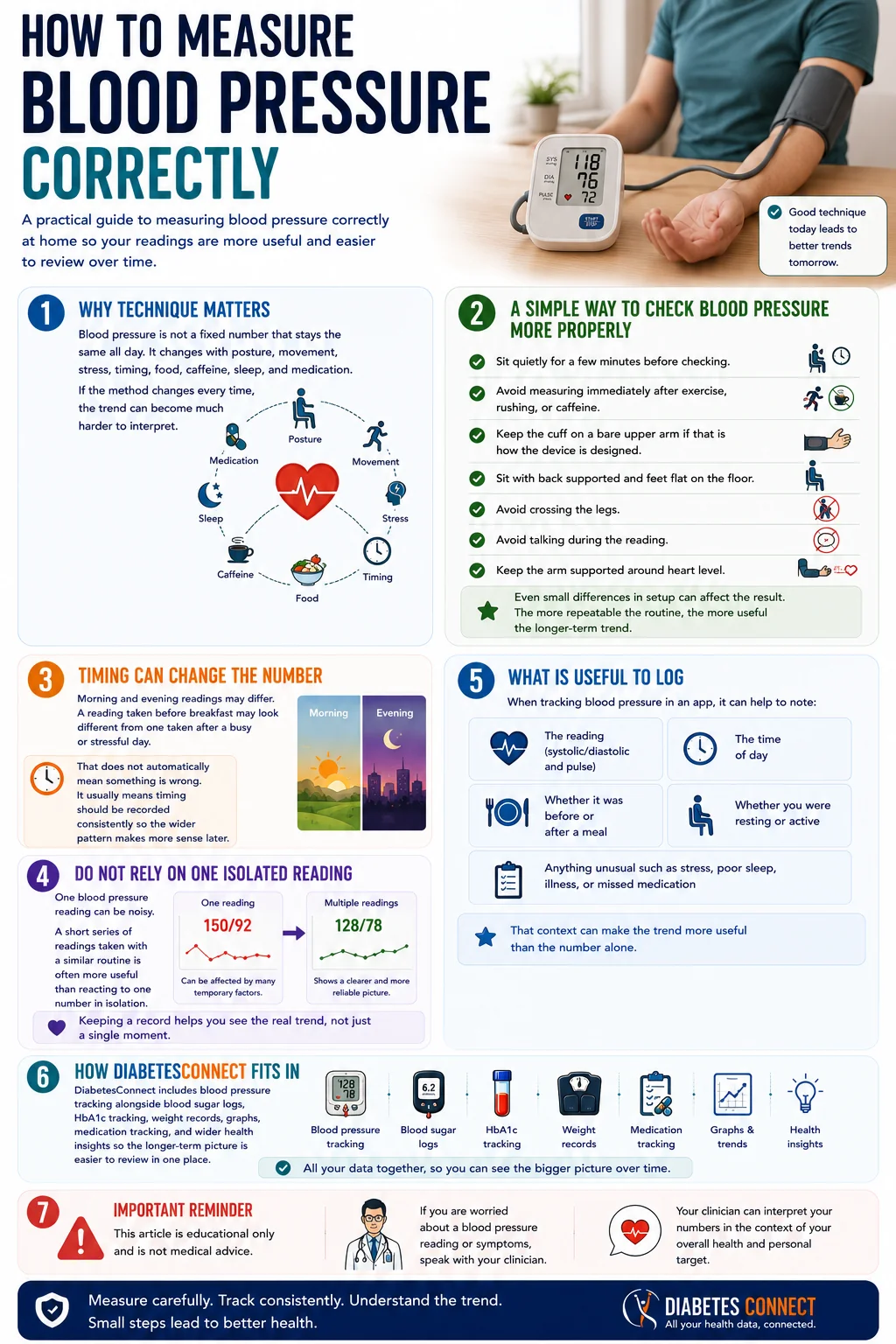
Home blood pressure readings are only useful if you take them the same way each time.
A reading after rushing upstairs, talking, or drinking coffee can look very different from a rested reading. Good technique helps you spot real trends instead of random swings.
Start with a consistent setup
Before measuring, sit quietly for about 5 minutes.
Then check these basics:
- use the cuff on a bare upper arm if your monitor is designed for that
- sit with your back supported
- keep both feet flat on the floor
- do not cross your legs
- rest your arm at heart level
- stay still and do not talk during the reading
These small details matter. If your setup changes every time, your numbers become harder to compare.
Avoid common mistakes that skew the reading
A home reading can run higher or lower than usual if you measure right after:
- exercise
- climbing stairs or rushing around
- caffeine
- smoking
- a stressful moment
A full bladder can also affect the result.
Bottom line: try to measure when you are calm and under similar conditions each time.
Do not compare random readings
Blood pressure changes through the day. Morning and evening numbers are often different.
That is normal.
What matters more is comparing readings taken at a similar time and in a similar routine. For example, readings taken in the morning before breakfast are more useful when compared with other morning-before-breakfast readings.
One isolated number rarely tells the full story.
Take more than one reading
If your clinician has not told you otherwise, it is often more useful to take 2 readings about 1 minute apart and record the results.
This helps smooth out one-off variation.
What matters most is consistency. Use the same arm, the same chair, and roughly the same time of day when possible.
What to log with your blood pressure
The number alone is helpful. The context makes it more useful.
When you track a reading, note:
- date and time
- systolic and diastolic reading
- pulse, if your device shows it
- whether you were rested
- anything unusual, like stress, poor sleep, illness, or missed medication
If you already track blood sugar, weight, or HbA1c, keeping blood pressure in the same place can make patterns easier to spot over time. DiabetesConnect includes blood pressure tracking alongside other key health logs, so you can review trends without piecing notes together later.
Doctor note
If your home readings are often very different from clinic readings, bring your monitor to your next appointment if possible. Your care team can check whether the cuff size and technique are right.
If you have concerning symptoms such as chest pain, severe shortness of breath, weakness on one side, confusion, or a severe headache with a very high reading, seek urgent medical care.
Takeaway
The best blood pressure routine is a repeatable one.
Sit quietly, use the right position, measure under similar conditions, and log enough context to understand the trend. That gives you a much clearer picture than reacting to one random reading.
Part of guide
Blood Pressure Guide
Find clear guides on blood pressure ranges, home checks, patterns over time, and why blood pressure matters in diabetes.
Open topic hubMake the next step easier
Keep the useful bits from this guide in one place.
Track meals, blood sugar, weight, and diabetes trends together so your notes are easier to understand at the next appointment.