By Dr Ryizan Nizar MD, MRCP UK (Diabetes and Endocrinology), CCT
Last updated 18 May 2026
Protein and Diabetes
A practical overview of why protein often comes up in diabetes-related food tracking, and how it can fit into a wider pattern of meals, calories, and long-term monitoring.
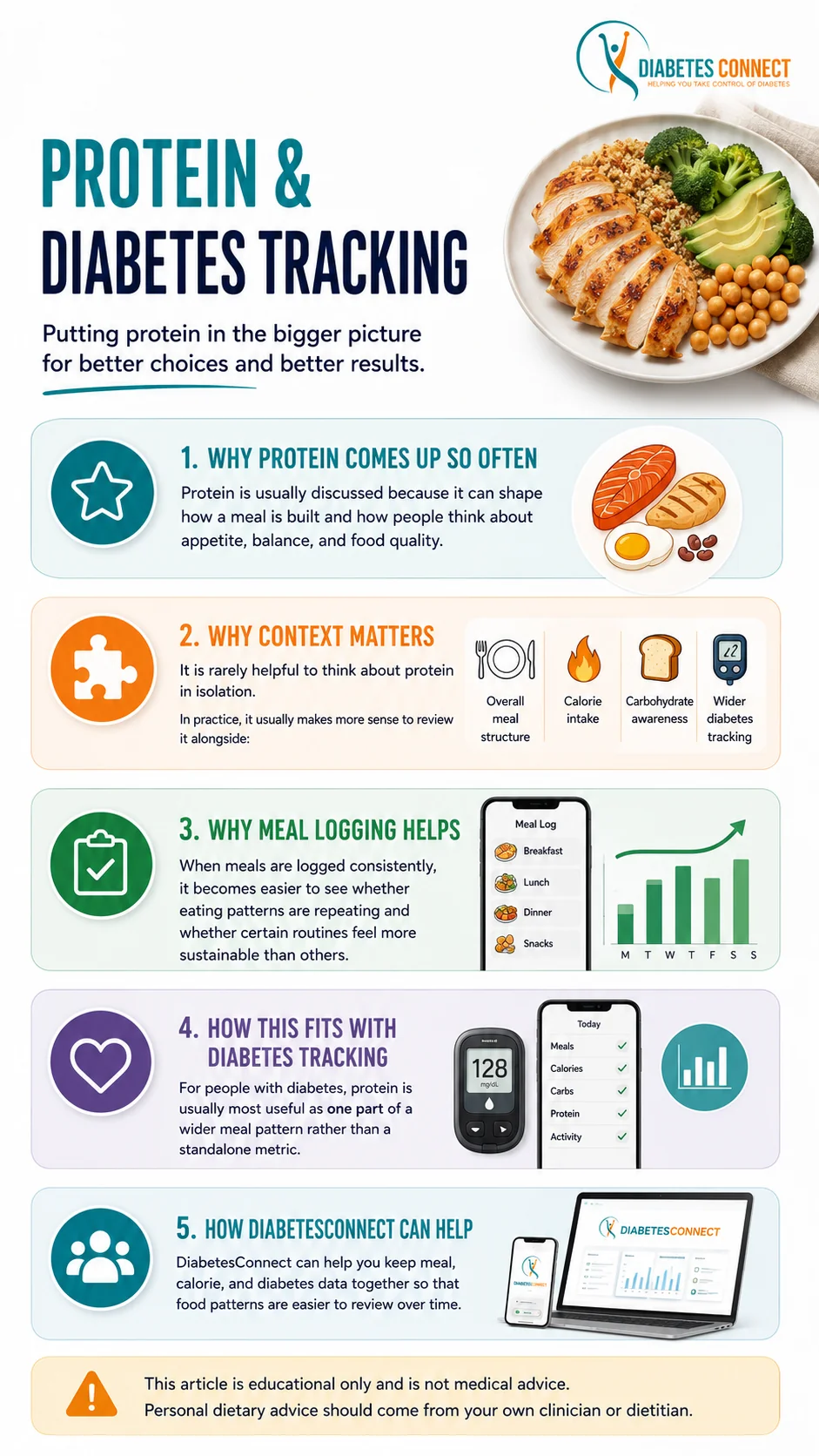
Protein is a common part of nutrition discussions, especially when people are trying to make meal tracking more useful and balanced.
Why protein comes up so often
Protein is usually discussed because it can shape how a meal is built and how people think about appetite, balance, and food quality.
Why context matters
It is rarely helpful to think about protein in isolation.
In practice, it usually makes more sense to review it alongside:
- overall meal structure
- calorie intake
- carbohydrate awareness
- wider diabetes tracking
Why meal logging helps
When meals are logged consistently, it becomes easier to see whether eating patterns are repeating and whether certain routines feel more sustainable than others.
How this fits with diabetes tracking
For people with diabetes, protein is usually most useful as one part of a wider meal pattern rather than a standalone metric.
How DiabetesConnect can help
DiabetesConnect can help you keep meal, calorie, and diabetes data together so that food patterns are easier to review over time.
This article is educational only and is not medical advice. Personal dietary advice should come from your own clinician or dietitian.
Part of guide
Diabetes Food Guide
Browse diabetes food guides covering fruit, drinks, protein, meal choices, and what to watch for in day-to-day eating.
Open topic hubMake the next step easier
Keep the useful bits from this guide in one place.
Track meals, blood sugar, weight, and diabetes trends together so your notes are easier to understand at the next appointment.