By Dr Ryizan Nizar MD, MRCP UK (Diabetes and Endocrinology), CCT
Last updated 15 May 2026
How to Build Healthy Habits on GLP-1 Medications
GLP-1 medications like Ozempic and Mounjaro can be powerful tools, but lasting results still depend on habits. Learn how to protect muscle, eat enough protein, and build sustainable weight loss habits.
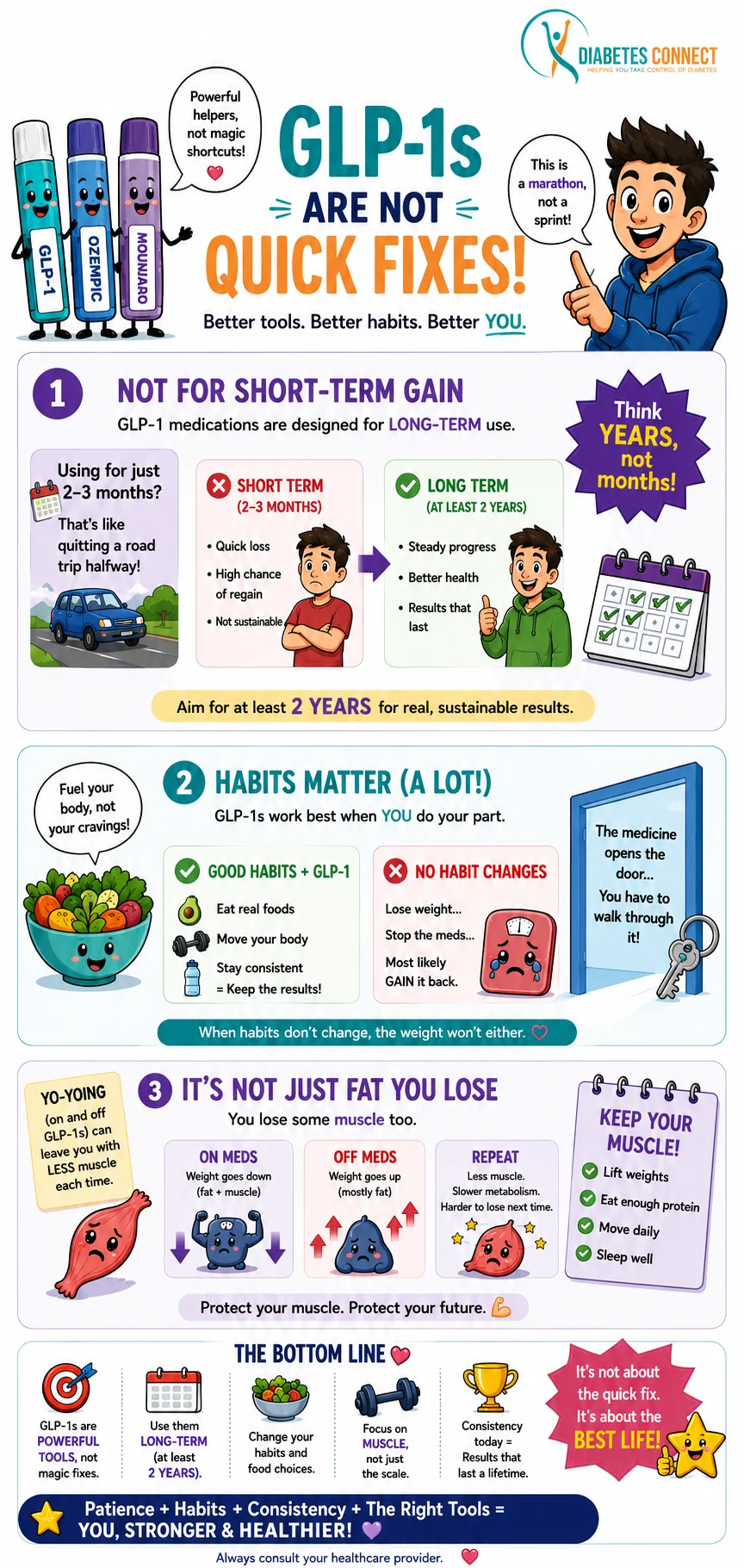
GLP-1 medications like Ozempic and Mounjaro can be powerful tools.
But they are not magic.
They often work best when you treat them as part of a long-term plan, not a short sprint to lose weight fast. That matters because the people who do best over time usually build habits while the medication is helping them eat less, notice fullness sooner, and stay more consistent.
GLP-1s work best as a long game
These medications can lower appetite, slow stomach emptying, and improve blood sugar control. For many people, that creates a real opening: less food noise, fewer overeating episodes, and a better chance to reset routines.
That opening is useful. It is also temporary if nothing else changes.
A common mistake is thinking the medication does all the work. In real life, GLP-1s are usually more effective when they are part of a longer strategy built around repeatable habits. The medication helps open the door. Your routines decide what happens after that.
Why habits still matter on Ozempic or Mounjaro
If appetite drops, it becomes easier to eat less. That does not automatically mean you are eating well.
Some people end up skipping meals, eating too little protein, or relying on small amounts of low-nutrient food because they are not very hungry. Weight may go down, but the foundation is weak.
The goal is not just less food. The goal is better structure.
That usually means:
- regular meals, even if portions are smaller
- enough protein to help preserve muscle
- some planned movement each week
- a routine you can still imagine doing months from now
This is where tracking helps. A simple log of meals, protein, weight, and activity can show whether you are building a pattern or just eating less by accident. In DiabetesConnect, tools like the AI Meal Analyzer and tracking for calories, protein, weight, and activity can make those patterns easier to see without overcomplicating it.
What often happens when people stop too soon
One reason GLP-1s get called a “quick fix” is that people sometimes expect a short course to create permanent results.
Often, it does not work that way.
When the medication stops, appetite suppression usually fades. If daily habits did not change much during treatment, older patterns can return quickly. That is a big reason weight regain is common after short-term use.
This is not failure. It is physiology plus routine.
A tight example: someone loses weight on a GLP-1 because they feel full faster, but they never build a regular breakfast, protein target, walking routine, or strength habit. After stopping, hunger rises, portions grow, and weight starts coming back. The medication helped for a season, but the daily system was never rebuilt.
Fast weight loss can cost you muscle
This part gets overlooked.
When weight drops quickly, some of that loss can be muscle, not just body fat. Muscle matters for strength, balance, energy use, and staying active as you age.
Losing muscle is more likely when you are:
- eating very little
- getting too little protein
- avoiding resistance or strength-building activity
- focusing only on the scale
You do not need to become a bodybuilder. But muscle preservation should be part of the plan.
In plain English: if the scale is falling but you are getting weaker, less steady, or more fatigued, that is not the kind of progress you want.
The habits that make results more likely to last
Think boring, not extreme.
The habits that tend to hold up are the ones people can repeat when motivation is average.
Start with four basics:
1. Eat enough protein. Protein helps with fullness and helps protect muscle during weight loss.
2. Keep meals structured. Smaller appetite is useful, but skipping food all day and then eating randomly at night usually backfires.
3. Move consistently. Walking is good. Strength work is especially useful for preserving muscle.
4. Watch trends, not daily drama. Long-term progress matters more than a few fast weeks.
Takeaway: the best use of a GLP-1 is often to make healthy routines easier to practice often enough that they still exist if the treatment changes later.
Doctor note
I talk to many patients who feel pressure to lose weight quickly once they start a GLP-1. That pressure usually gets in the way. Faster is not always better, especially if the process leaves you undernourished, inactive, and weaker.
A better question is: what habits are becoming more stable while the medication is helping? If your meals are more balanced, your protein is better, your movement is more regular, and your progress is steady, you are building something much more valuable than a short-term drop on the scale.
GLP-1 medications can be excellent tools. Just do not ask them to be magic. Long-term health usually comes from medication plus habits, not medication instead of habits.
Dr Ryizan Nizar Consultant Endocrinologist Founder DiabetesConnect
Part of guide
Diabetes Medicines Guide
Explore articles on metformin, GLP-1 medicines, sulfonylureas, dosing questions, and what to monitor while treatment changes.
Open topic hubMake the next step easier
Keep the useful bits from this guide in one place.
Track meals, blood sugar, weight, and diabetes trends together so your notes are easier to understand at the next appointment.