By Dr Ryizan Nizar MD, MRCP UK (Diabetes and Endocrinology), CCT
Last updated 23 May 2026
Calorie Deficit Explained
A careful explanation of what a calorie deficit means, and how to think about it in a more practical way when tracking food, weight, and diabetes-related routines.
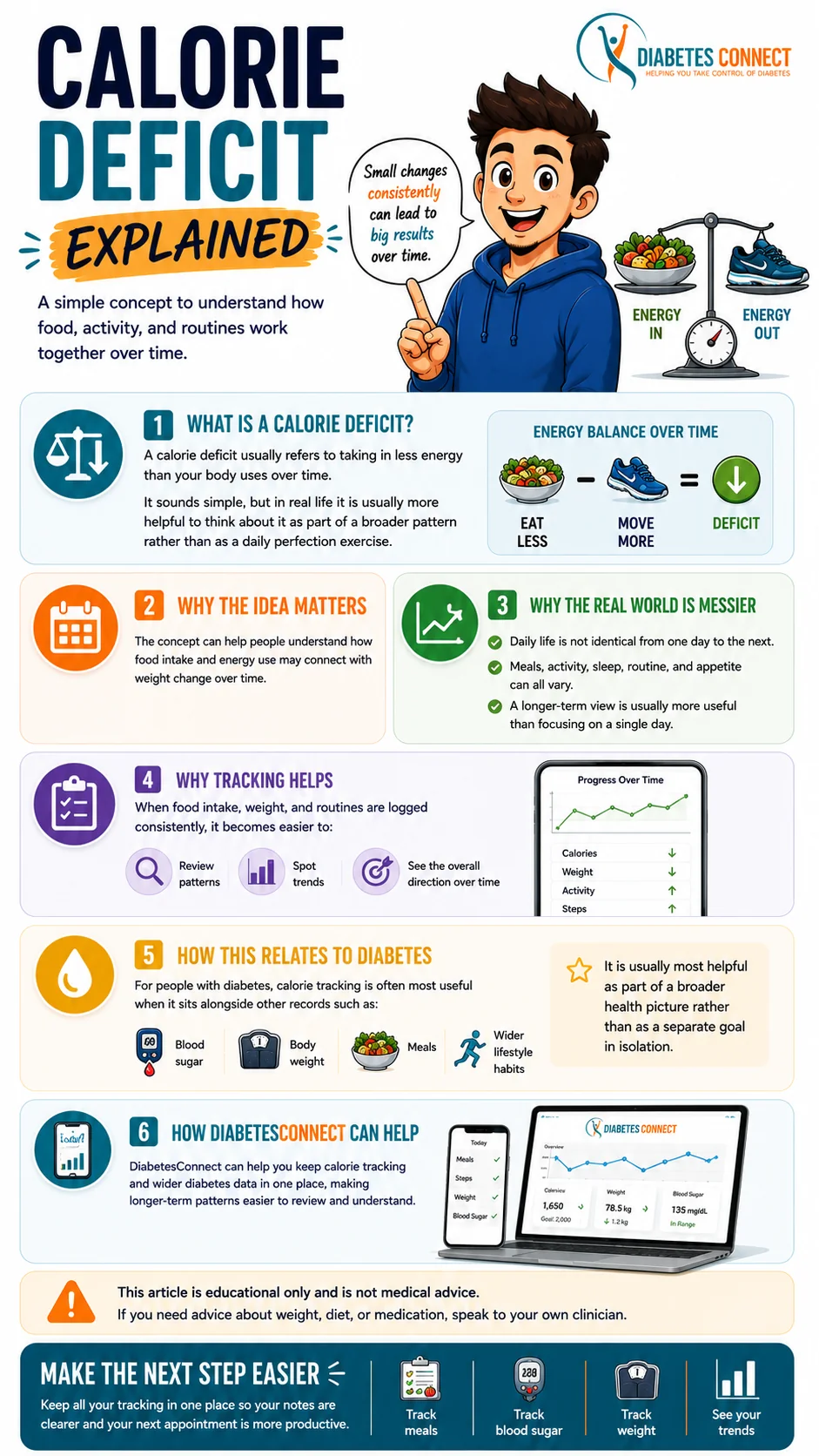
A calorie deficit usually refers to taking in less energy than your body uses over time.
It sounds simple, but in real life it is usually more helpful to think about it as part of a broader pattern rather than as a daily perfection exercise.
Why the idea matters
The concept can help people understand how food intake and energy use may connect with weight change over time.
Why the real world is messier
Daily life is not identical from one day to the next.
Meals, activity, sleep, routine, and appetite can all vary, which is why a longer-term view is usually more useful than obsessing over a single day.
Why tracking helps
When food intake, weight, and routines are logged consistently, it becomes easier to review patterns and notice whether the overall direction is changing over time.
How this relates to diabetes
For people with diabetes, calorie tracking is often most useful when it sits alongside other records such as:
- blood sugar
- body weight
- meals
- wider lifestyle habits
rather than being treated as a separate goal in isolation.
How DiabetesConnect can help
DiabetesConnect can help you keep calorie tracking and wider diabetes data in one place, making longer-term patterns easier to review and understand.
Important reminder
This article is educational only and is not medical advice. If you need advice about weight, diet, or medication, speak to your own clinician.
Part of guide
Weight and Metabolic Health Guide
Browse practical articles on weight trends, BMI, calorie deficit, body fat, and longer-term metabolic health in diabetes.
Open topic hubMake the next step easier
Keep the useful bits from this guide in one place.
Track meals, blood sugar, weight, and diabetes trends together so your notes are easier to understand at the next appointment.