By Dr Ryizan Nizar MD, MRCP UK (Diabetes and Endocrinology), CCT
Last updated 23 May 2026
BMI Explained
A practical explanation of what BMI can and cannot tell you, and why it is often more useful when reviewed alongside weight trends and other health markers.
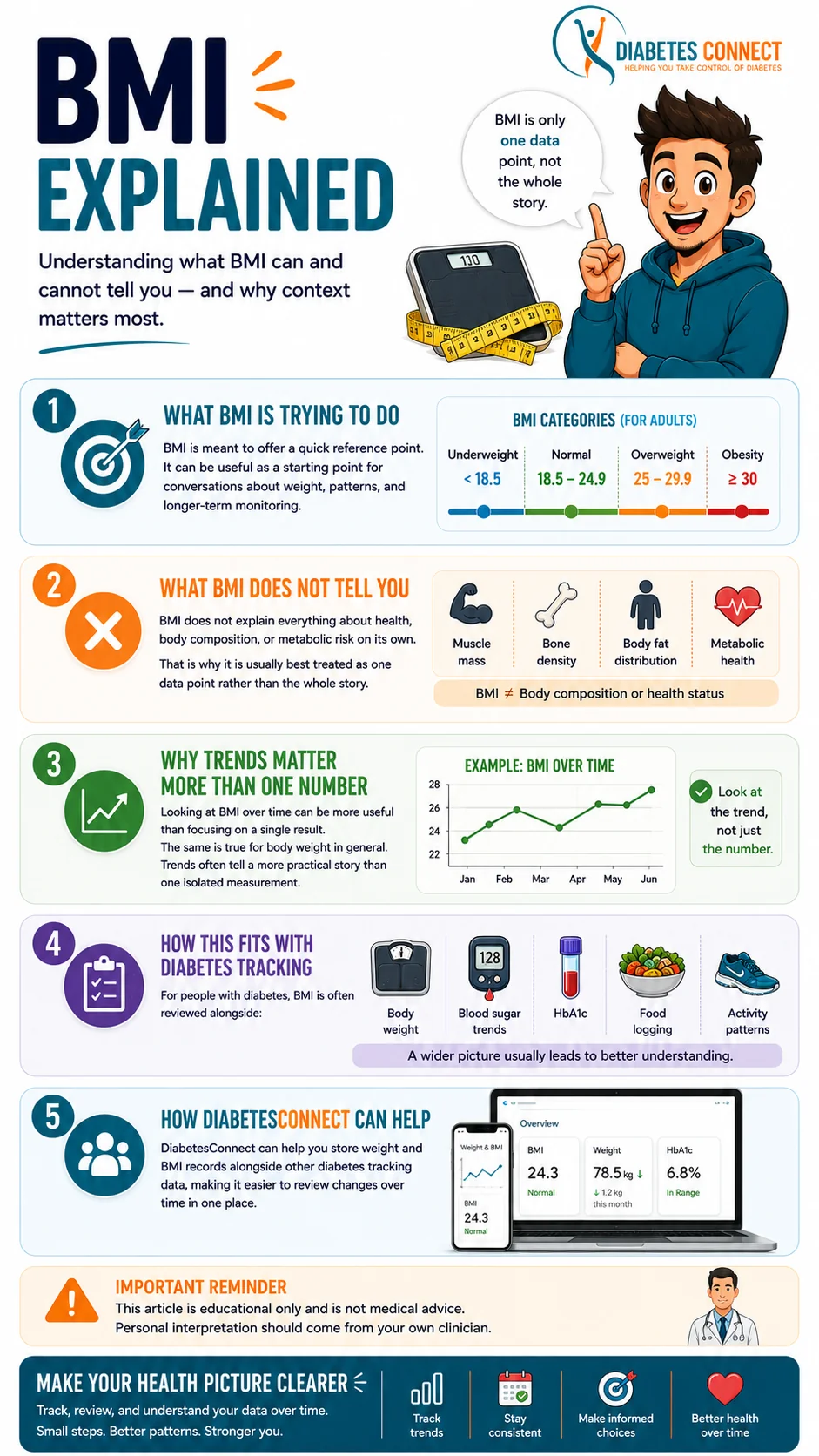
BMI is commonly used as a simple way to compare weight with height, but it is only one part of a much wider health picture.
What BMI is trying to do
BMI is meant to offer a quick reference point.
It can be useful as a starting point for conversations about weight, patterns, and longer-term monitoring.
What BMI does not tell you
BMI does not explain everything about health, body composition, or metabolic risk on its own.
That is why it is usually best treated as one data point rather than the whole story.
Why trends matter more than one number
Looking at BMI over time can be more useful than focusing on a single result.
The same is true for body weight in general. Trends often tell a more practical story than one isolated measurement.
How this fits with diabetes tracking
For people with diabetes, BMI is often reviewed alongside:
- body weight
- blood sugar trends
- HbA1c
- food logging
- activity patterns
That combined picture is usually more helpful than BMI on its own.
How DiabetesConnect can help
DiabetesConnect can help you store weight and BMI records alongside other diabetes tracking data, making it easier to review changes over time in one place.
Important reminder
This article is educational only and is not medical advice. Personal interpretation should come from your own clinician.
Part of guide
Weight and Metabolic Health Guide
Browse practical articles on weight trends, BMI, calorie deficit, body fat, and longer-term metabolic health in diabetes.
Open topic hubMake the next step easier
Keep the useful bits from this guide in one place.
Track meals, blood sugar, weight, and diabetes trends together so your notes are easier to understand at the next appointment.