By Dr Ryizan Nizar MD, MRCP UK (Diabetes and Endocrinology), CCT
Last updated 3 July 2026
Which Organ Is Most Affected by Diabetes?
Diabetes affects many parts of the body, but blood vessels, kidneys, eyes, nerves, and heart often take the biggest hit over time. Here’s what matters most and why.
The short answer
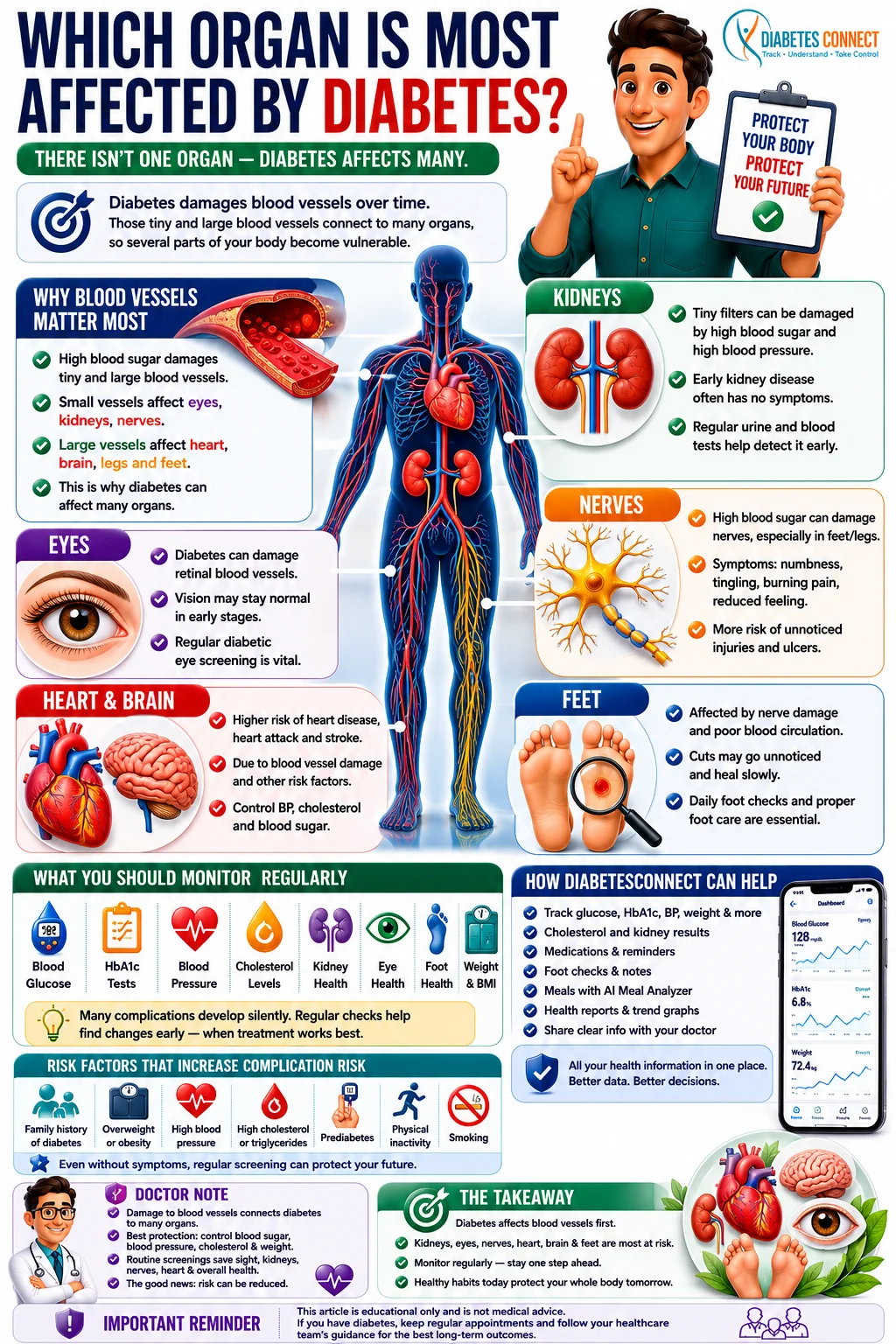
There is not one single organ that diabetes affects the most.
The bigger issue is that diabetes often damages blood vessels first. Once that happens, several organs become vulnerable — especially the kidneys, eyes, nerves, heart, brain, and feet.
That matters because diabetes complications usually develop gradually. Many people feel completely well while changes are already occurring in the background.
Why blood vessels matter most
High blood sugar over time places stress on blood vessels throughout the body.
Small blood vessels are particularly important in the:
- eyes
- kidneys
- nerves
Larger blood vessels are especially important for the:
- heart
- brain
- legs and feet
So the most accurate answer is this:
Diabetes most broadly affects the blood vessel system, which can lead to damage across multiple organs.
This is why diabetes management is about much more than blood sugar alone. Blood pressure, cholesterol, kidney health, and regular eye screening are all important parts of long-term care.
The organs most commonly affected
Kidneys
The kidneys are among the organs most commonly affected by diabetes.
They rely on thousands of tiny blood vessels to filter waste from the blood. Persistently high blood sugar and high blood pressure can gradually damage these filters.
Early diabetic kidney disease often causes no symptoms, making routine urine and blood tests especially important.
Eyes
Diabetes can damage the small blood vessels in the retina, a condition known as diabetic retinopathy.
Vision may remain normal during the early stages, which is why regular diabetic eye screening is recommended even if you have no vision problems.
Nerves
High blood sugar can damage nerves throughout the body, particularly those supplying the feet and legs.
Symptoms may include:
- numbness
- tingling
- burning pain
- reduced sensation
Reduced feeling increases the risk of unnoticed injuries and foot ulcers.
Heart and brain
Diabetes significantly increases the risk of:
- heart disease
- heart attack
- stroke
This is partly due to damage affecting larger blood vessels and partly because diabetes commonly occurs alongside high blood pressure, abnormal cholesterol, and excess weight.
Feet
The feet deserve special attention because they are affected by both nerve damage and reduced circulation.
Reduced sensation means small injuries may go unnoticed, while poorer blood flow can slow healing.
Regular foot checks and early treatment of cuts, blisters, or ulcers are an important part of diabetes care.
What this means in real life
Rather than asking which organ is most affected, a more useful question is:
What should you monitor regularly?
The main areas include:
- blood glucose
- HbA1c
- blood pressure
- cholesterol
- kidney function
- eye health
- foot health
- body weight
Many diabetes complications develop silently.
For example, someone with type 2 diabetes may feel completely well while routine tests detect early kidney changes long before symptoms appear.
Regular monitoring helps identify these changes early, when treatment is often most effective.
How DiabetesConnect can help
DiabetesConnect brings together many of the key parts of diabetes monitoring in one place.
You can track:
- blood glucose readings
- HbA1c results
- blood pressure
- weight and BMI
- cholesterol
- kidney health results
- medication records and reminders
- foot checks
- health reports and long-term trend graphs
Keeping these records together makes it easier to monitor your overall health and discuss changes with your healthcare team.
Doctor note
Patients often ask this question because they want to know which part of the body is most at risk.
The honest answer is that diabetes is rarely a one-organ disease.
In practice, we focus on protecting blood vessels because they connect to so many important organs. Looking after blood sugar, blood pressure, cholesterol, and attending routine screening appointments gives the best chance of preventing or delaying complications.
The good news is that risk is not fixed. Many complications can be delayed or reduced with good long-term diabetes management.
Takeaway
The clearest answer is this:
Diabetes most broadly affects the blood vessels, which is why the kidneys, eyes, nerves, heart, brain, and feet are monitored so closely.
Looking after your diabetes is about protecting your whole body, not just your blood sugar.
Important reminder
This article is educational only and is not medical advice. If you have diabetes, regular reviews with your healthcare team remain an important part of preventing long-term complications.
Part of guide
How Diabetes Affects Your Body
Explore how diabetes can affect blood vessels, the heart, kidneys, eyes, nerves, and other parts of the body over time.
Open topic hubMake the next step easier
Keep the useful bits from this guide in one place.
Track meals, blood sugar, weight, and diabetes trends together so your notes are easier to understand at the next appointment.