By Dr Ryizan Nizar MD, MRCP UK (Diabetes and Endocrinology), CCT
Last updated 12 June 2026
What Foods Should Diabetics Avoid?
A direct guide to foods people with diabetes should limit or avoid, why they affect blood sugar, and what to choose instead.
The short answer
People with diabetes do not need to fear every carbohydrate or follow a perfect diet.
The more useful question is: which foods are most likely to cause repeated blood sugar spikes, add excess calories, or make diabetes harder to manage?
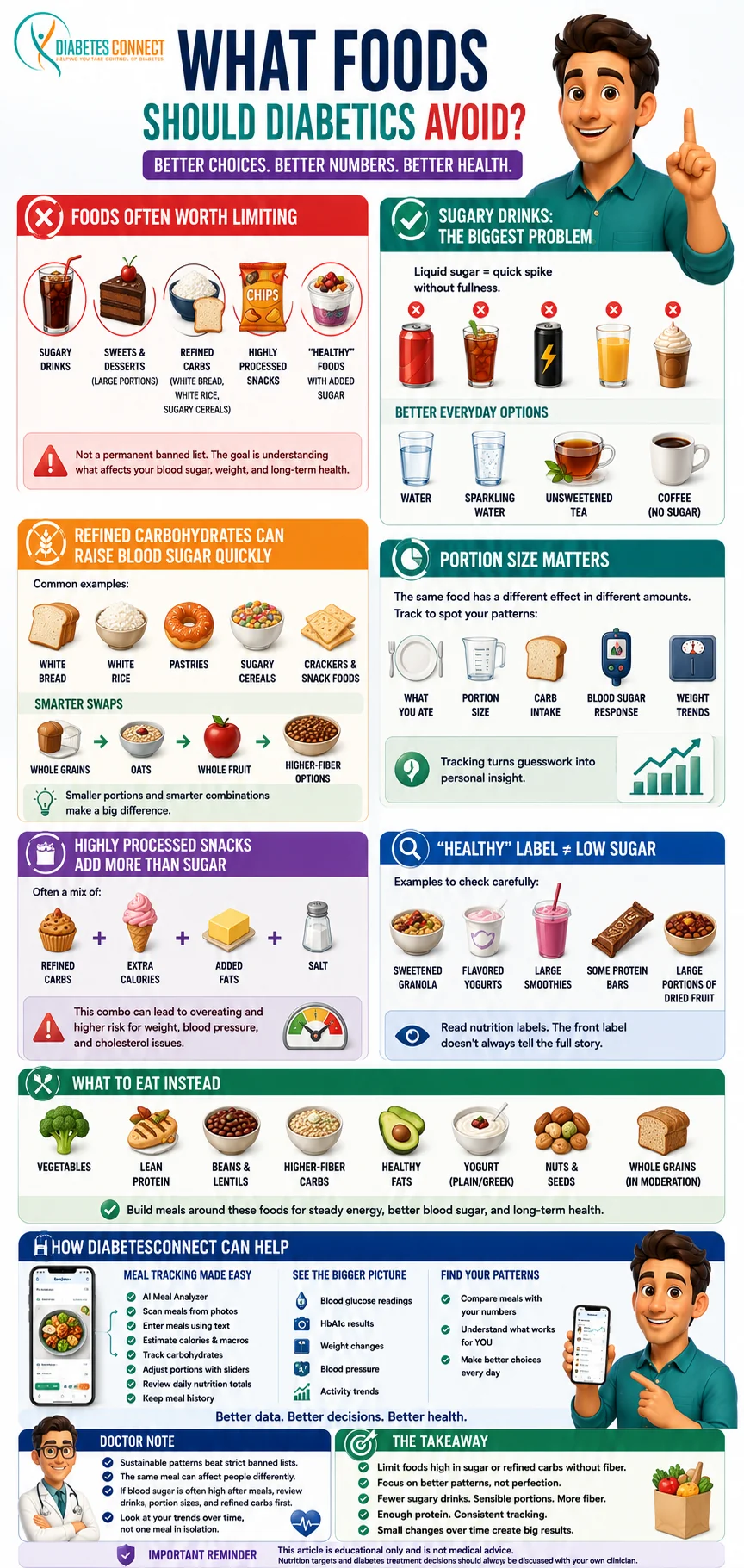
Foods that are often worth limiting include:
- sugary drinks
- sweets and desserts in large portions
- refined carbohydrates like white bread, white rice, and sugary cereals
- highly processed snack foods
- foods marketed as “healthy” that still contain a lot of added sugar
The goal is not a permanent banned-food list.
The goal is understanding which choices affect your blood sugar, weight, and long-term health patterns.
Sugary drinks are usually the biggest problem
If you only change one thing, drinks are often the best place to start.
Regular soda, sweet tea, energy drinks, juice drinks, and many sweetened coffee drinks deliver sugar quickly without making you feel full.
That combination can lead to a fast rise in blood sugar.
Fruit juice is a common example. Even though it comes from fruit, it removes much of the fiber found in whole fruit and can raise glucose much faster.
Better everyday options include:
- water
- sparkling water without added sugar
- unsweetened tea
- coffee without sugary syrups
Refined carbohydrates can raise blood sugar quickly
Not all carbohydrates behave the same way.
Refined carbohydrates are usually digested faster because much of the natural fiber has been removed.
Common examples include:
- white bread
- white rice
- pastries
- sugary cereals
- many crackers and snack foods
These foods can be especially challenging when eaten alone or in large portions.
That does not mean everyone needs to completely remove them.
Smaller portions and smarter combinations can make a difference.
Examples of swaps include:
- whole grains instead of refined grains
- oats instead of sugary cereal
- whole fruit instead of juice
- higher-fiber options where possible
Portion size matters
A food does not have the same effect in every amount.
A small portion of a higher-carbohydrate food may fit into someone's routine, while a much larger portion may lead to higher readings.
This is why tracking can be helpful.
Patterns often become clearer when you can compare:
- what you ate
- portion size
- carbohydrate intake
- blood sugar response
- weight trends over time
Highly processed snacks add more than sugar
Chips, cookies, sweets, packaged cakes, and similar foods are not only about sugar.
They often combine:
- refined carbohydrates
- extra calories
- added fats
- salt
This combination can make it easier to eat more than planned.
Diabetes management is not only about a single glucose reading. Weight, blood pressure, cholesterol, and overall health also matter.
Some “healthy” foods can still affect blood sugar
A food is not automatically diabetes-friendly because the label says:
- natural
- organic
- low fat
- gluten free
Examples that can still contain significant sugar or calories include:
- sweetened granola
- flavored yogurts
- large smoothies
- some protein bars
- large portions of dried fruit
The label on the front of the package does not always tell the full story.
What to eat instead
A practical approach is usually to build meals around:
- vegetables
- protein sources
- higher-fiber carbohydrates
- healthier fats
Examples include:
- eggs
- fish
- chicken
- tofu
- beans and lentils
- plain or Greek yogurt
- vegetables
- nuts and seeds
- whole grains in suitable portions
The aim is not perfection.
It is building a pattern you can maintain.
How DiabetesConnect can help
DiabetesConnect helps you understand how food choices fit into your wider diabetes picture.
You can:
- analyze meals using the AI Meal Analyzer
- scan meals from photos
- enter meals using text
- estimate calories and macronutrients
- track carbohydrates
- adjust portions with sliders
- review daily nutrition totals
- keep meal history
You can also compare meals alongside:
- blood glucose readings
- HbA1c results
- weight changes
- blood pressure
- activity trends
This makes it easier to identify your own patterns instead of relying only on general food rules.
Doctor note
Most people with diabetes do better with sustainable patterns rather than strict lists of forbidden foods.
The same meal can affect different people differently depending on:
- portion size
- activity
- medication
- timing
- overall routine
If your blood sugar is often higher after meals, the biggest places to review first are usually sugary drinks, portion sizes, and refined carbohydrates.
Looking at your own trends is usually more useful than judging one meal in isolation.
Takeaway
The foods to limit most often are usually the ones that provide a lot of sugar or refined carbohydrates without much fiber or fullness.
Focus on better patterns:
- fewer sugary drinks
- sensible portions
- more fiber
- enough protein
- consistent tracking
Small changes repeated over time usually matter more than trying to create a perfect diet overnight.
Important reminder
This article is educational only and is not medical advice. Nutrition targets and diabetes treatment decisions should always be discussed with your own clinician.
Part of guide
Diabetes Food Guide
Browse diabetes food guides covering fruit, drinks, protein, meal choices, and what to watch for in day-to-day eating.
Open topic hubMake the next step easier
Keep the useful bits from this guide in one place.
Track meals, blood sugar, weight, and diabetes trends together so your notes are easier to understand at the next appointment.