By Dr Ryizan Nizar MD, MRCP UK (Diabetes and Endocrinology), CCT
Last updated 14 June 2026
What Foods Help Keep Blood Sugar Steady
Learn which foods help keep blood sugar steady and why. Practical, diabetes-friendly tips on carbs, protein, fiber, fats, and simple meal choices.
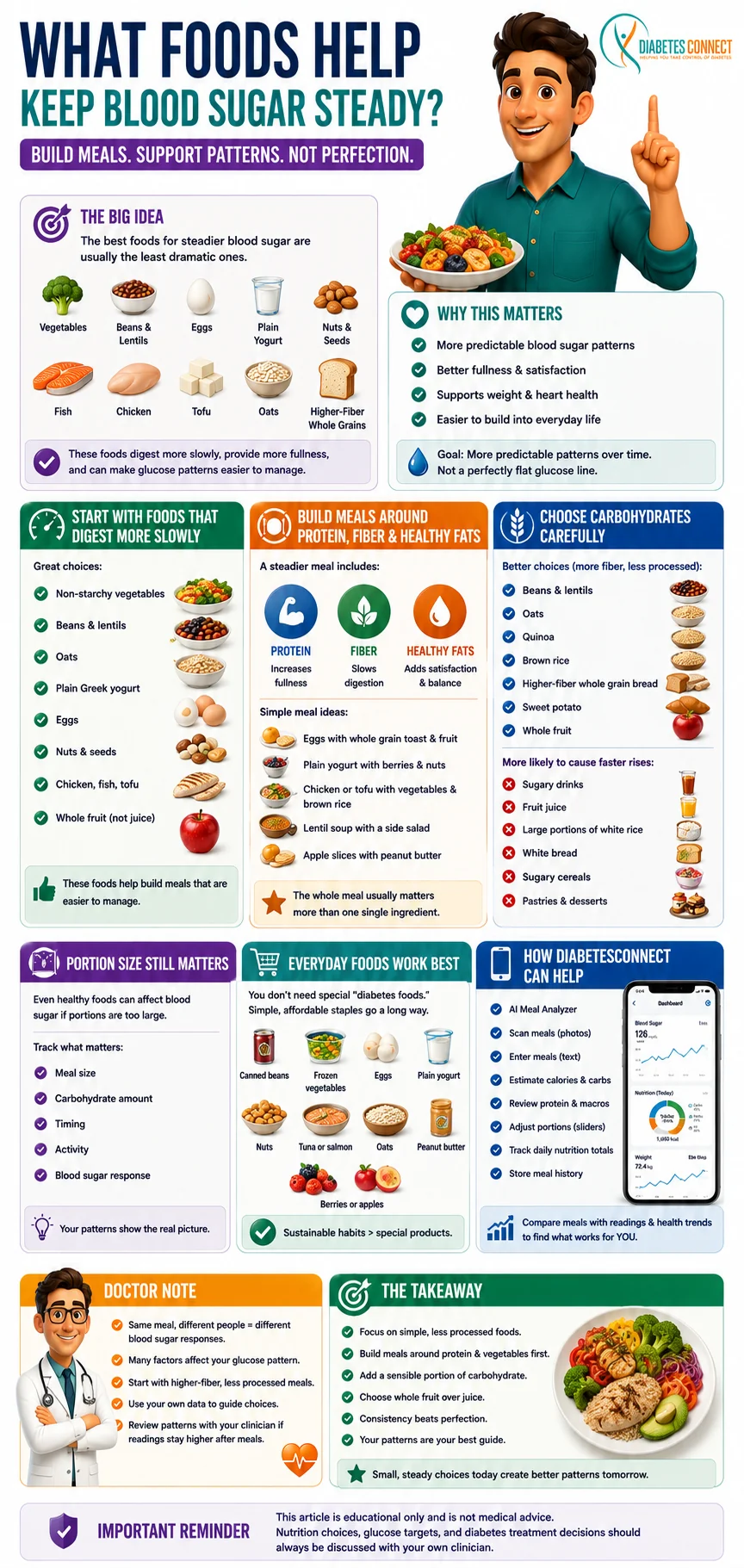
The best foods for steadier blood sugar are usually the least dramatic ones:
- vegetables
- beans and lentils
- eggs
- plain yogurt
- nuts and seeds
- fish
- chicken
- tofu
- oats
- higher-fiber whole grains
The reason these foods often help is simple: they usually digest more slowly, provide more fullness, and can make glucose patterns easier to manage.
For people with diabetes, the goal is usually not a perfectly flat blood sugar line. The goal is building meals that create more predictable patterns over time.
Start with foods that digest more slowly
If your goal is steadier blood sugar, think less about “superfoods” and more about how the overall meal is built.
Fast-digesting foods are more likely to raise blood sugar quickly, especially in larger portions.
Common examples include:
- sugary drinks
- fruit juice
- sweets
- white bread
- large portions of refined carbohydrates
Slower-digesting foods often fit better into a balanced routine.
Examples include:
- non-starchy vegetables like broccoli, salad greens, peppers, and cauliflower
- beans and lentils
- oats
- plain Greek yogurt
- eggs
- nuts and seeds
- chicken, fish, tofu, and other protein-rich foods
- whole fruit instead of juice
These foods do not remove the effect of carbohydrates.
They simply help create meals that are usually easier to manage.
Build meals around protein, fiber, and healthy fats
A steadier meal often contains a combination of:
- protein
- fiber
- healthy fats
- sensible carbohydrate portions
Protein can increase fullness.
Fiber slows digestion.
Healthy fats can help meals feel more satisfying, although portion size still matters.
Simple examples include:
- eggs with whole grain toast and fruit
- plain yogurt with berries and nuts
- chicken or tofu with vegetables and brown rice
- lentil soup with a side salad
- apple slices with peanut butter
The whole meal usually matters more than one single ingredient.
Choose carbohydrates carefully
Carbohydrates are not automatically bad.
The bigger questions are:
- what type of carbohydrate is it?
- how large is the portion?
- what else is eaten with it?
Carbohydrates that come with fiber or a less processed structure are often easier to include.
Examples include:
- beans and lentils
- oats
- quinoa
- brown rice
- higher-fiber whole grain bread
- sweet potato
- whole fruit
Foods that are more likely to cause faster rises include:
- sugary drinks
- fruit juice
- large portions of white rice
- white bread
- sugary cereals
- pastries and desserts
A simple example:
A bowl of sugary cereal may affect blood sugar very differently compared with oatmeal with berries and nuts.
Both are breakfast, but the overall meal structure is different.
Portion size still matters
Even healthier foods can affect blood sugar if the portion becomes much larger.
A large serving of a higher-fiber carbohydrate can still contain a significant amount of carbohydrate.
This is why looking at your own patterns helps.
Useful things to review include:
- meal size
- carbohydrate amount
- timing
- activity
- blood sugar response
Everyday foods often work better than “diabetes foods”
You do not need special products labelled for diabetes.
Many regular foods are affordable, simple, and easier to keep using.
Useful staples include:
- canned beans
- frozen vegetables
- eggs
- plain yogurt
- nuts
- tuna or salmon
- oats
- peanut butter
- berries or apples
A sustainable routine usually matters more than buying special products.
How DiabetesConnect can help
DiabetesConnect can help you understand how your own meals affect your patterns.
You can:
- analyze meals using the AI Meal Analyzer
- scan meals from photos
- enter meals using text
- estimate calories and carbohydrates
- review protein and other macronutrients
- adjust portions with sliders
- track daily nutrition totals
- store meal history
You can also compare meals alongside:
- blood glucose readings
- HbA1c results
- weight changes
- blood pressure
- activity levels
- health trends and graphs
This helps you move beyond general food lists and understand what works for your own routine.
Doctor note
Two people can eat the same meal and see different blood sugar responses.
Your glucose pattern can be affected by:
- portion size
- activity
- sleep
- stress
- illness
- medication
- timing of meals
That is why “best foods for diabetes” are only part of the answer.
Starting with higher-fiber, less processed meals is a good foundation, but your own trends provide the most useful feedback.
If you repeatedly notice higher readings after meals despite making changes, review those patterns with your diabetes clinician.
Takeaway
The foods most likely to support steadier blood sugar are usually simple, less processed foods:
- vegetables
- beans and lentils
- protein-rich foods
- nuts and seeds
- plain yogurt
- whole fruit
- higher-fiber carbohydrates
A practical rule:
Build meals around protein and vegetables first, then add a sensible portion of carbohydrate.
Consistent patterns usually matter more than finding one perfect food.
Important reminder
This article is educational only and is not medical advice. Nutrition choices, glucose targets, and diabetes treatment decisions should always be discussed with your own clinician.
Part of guide
Diabetes Food Guide
Browse diabetes food guides covering fruit, drinks, protein, meal choices, and what to watch for in day-to-day eating.
Open topic hubMake the next step easier
Keep the useful bits from this guide in one place.
Track meals, blood sugar, weight, and diabetes trends together so your notes are easier to understand at the next appointment.