By Dr Ryizan Nizar MD, MRCP UK (Diabetes and Endocrinology), CCT
Last updated 14 June 2026
Pros and Cons of Metformin for Type 2 Diabetes
Starting metformin? Learn what changes to expect in blood sugar and weight, common side effects, when monitoring matters, and how to track progress clearly.
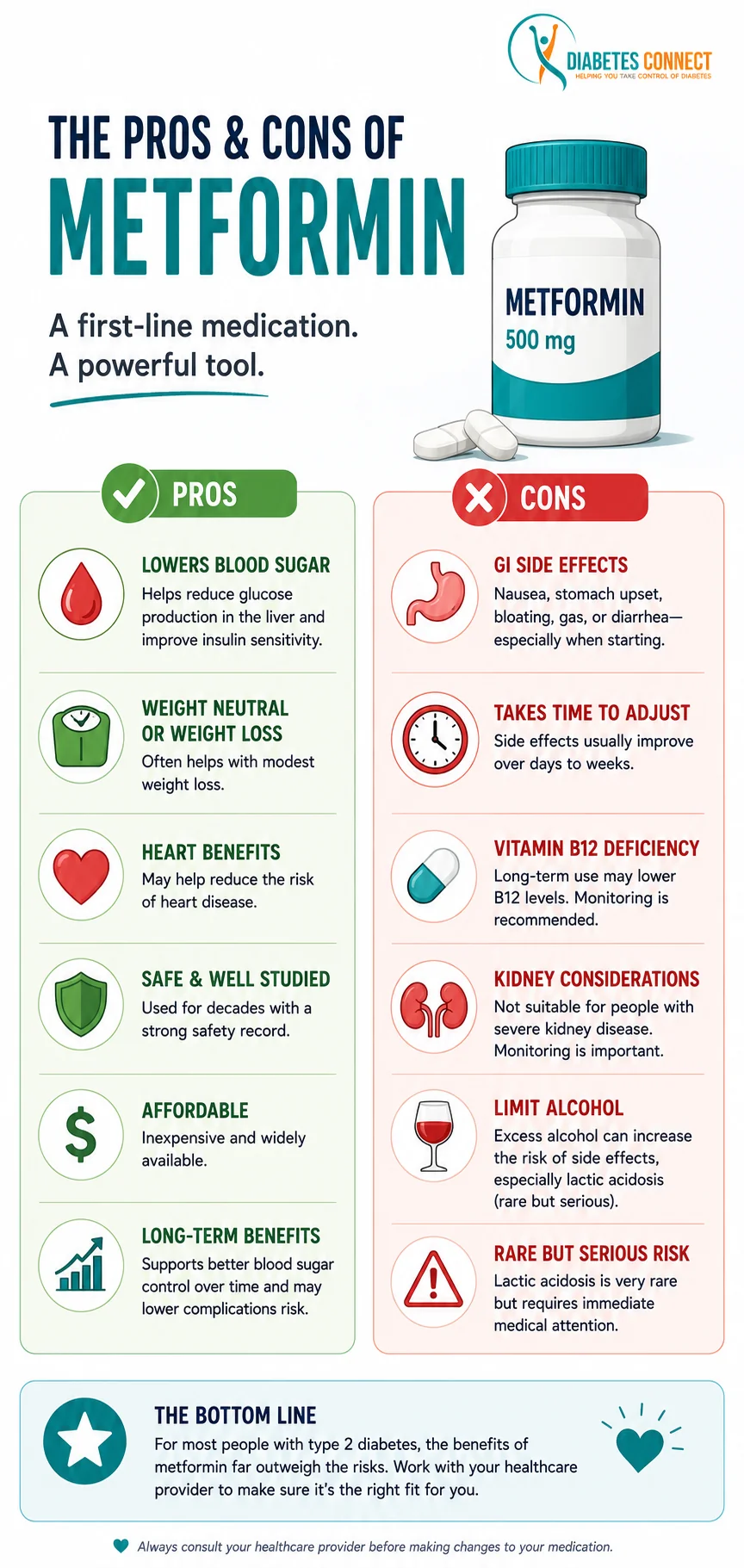
Metformin is one of the most widely used and best-studied first-line medicines for type 2 diabetes.
That matters because people often hear two extremes: either it is presented as effortless, or it is framed around side effects alone. The reality is more useful. Metformin works well for many people, but it works gradually, and tracking helps you see what is actually changing.
If you have just started it, the main things to watch are your blood sugar pattern, your weight trend, your stomach symptoms, and the lab follow-up your clinician recommends.
What metformin actually does
Metformin helps lower blood sugar in two main ways: it reduces how much glucose the liver releases, and it improves insulin sensitivity.
In plain English: your body handles glucose more efficiently, and your liver is less likely to add extra sugar into the bloodstream when it is not needed.
That is one reason metformin is often used first in type 2 diabetes. It has a long safety record, does not usually cause low blood sugar by itself, and fits well with food, activity, and weight-related goals.
What to expect in the first weeks
Metformin is not an instant fix. Some people see fasting or post-meal readings start to improve within days to weeks, but the bigger picture takes longer.
Your daily glucose readings may start to look steadier before your HbA1c fully changes. HbA1c reflects roughly the last 2 to 3 months, so early home readings often tell the story sooner.
A tight way to track this:
- fasting blood sugar
- a few post-meal readings each week
- body weight once or twice a week
- stomach side effects and when they happen
A short real-world example: if your fasting readings drop from the 160s to the 130s over a few weeks, that is a meaningful early sign, even if your weight barely changes.
Weight changes: usually modest, sometimes none
Many people want to know if metformin causes weight loss.
Usually, the answer is modest weight loss or weight neutrality. That means some people lose a small amount of weight, and many stay roughly stable. It is not usually a dramatic weight-loss medication.
That is still useful. Unlike some diabetes treatments that can increase weight, metformin often does not push weight upward. For someone trying to improve blood sugar while protecting against weight gain, that can be a real advantage.
If your weight does change, it often happens gradually. Looking at trends matters more than reacting to day-to-day fluctuations.
Side effects are common early, not usually permanent
The main downside of metformin is stomach upset.
Common early side effects include:
- nausea
- diarrhea
- bloating
- gas
- stomach discomfort
These symptoms are common when starting treatment or increasing the dose. For many people, they improve over time.
Practical ways to reduce stomach side effects:
- take it with food
- increase the dose gradually if your prescriber recommends that approach
- ask whether an extended-release version makes sense if symptoms persist
Metformin can also reduce appetite in some people, which may partly explain small weight changes.
Serious complications like lactic acidosis get a lot of attention online, but they are rare. The bigger day-to-day issue for most people is whether the medicine feels tolerable enough to keep taking consistently.
What to monitor long term
Two long-term checks matter most: kidney function and vitamin B12.
Kidney monitoring matters because metformin is cleared through the kidneys. If kidney function changes, your clinician may need to review whether the dose is still appropriate.
Vitamin B12 can run low in some people taking metformin long term. This is easy to miss because symptoms can be vague, including fatigue, numbness, tingling, or anemia.
Metformin also works best when it is not carrying the whole plan by itself. Food choices, movement, sleep, and weight trends still matter.
This is where simple tracking helps. In DiabetesConnect, logging blood sugar, weight, HbA1c, meals, and related health markers in one place makes it easier to see whether progress is coming from the whole routine, not just one prescription.
Doctor note
Metformin is popular for good reasons. It is well studied, familiar to clinicians, and effective for many people with type 2 diabetes. It also does not usually cause hypoglycemia on its own, which makes it easier to use safely than some other glucose-lowering drugs.
Still, “good first-line medication” does not mean “perfect fit for everyone.” If your stomach side effects are not settling, your glucose is not improving, or your kidney function changes, that is a follow-up conversation, not a failure.
A simple way to track progress
If you are starting metformin, focus on patterns, not perfection.
Watch for:
- lower fasting readings over time
- fewer very high post-meal spikes
- stable or slightly lower weight
- improving tolerance after the first few weeks
- follow-up labs such as HbA1c, kidney function, and sometimes B12
The takeaway: metformin is a strong first-line treatment because it is well studied, usually effective, and often weight-neutral or modestly weight-reducing. Its biggest drawback is early stomach side effects, and its biggest mistake is judging it too quickly without tracking what is changing.
Dr Ryizan Nizar Consultant Endocrinologist
Part of guide
Diabetes Medicines Guide
Explore articles on metformin, GLP-1 medicines, sulfonylureas, dosing questions, and what to monitor while treatment changes.
Open topic hubMake the next step easier
Keep the useful bits from this guide in one place.
Track meals, blood sugar, weight, and diabetes trends together so your notes are easier to understand at the next appointment.