By Dr Ryizan Nizar MD, MRCP UK (Diabetes and Endocrinology), CCT
Last updated 9 June 2026
Sulfonylureas for Type 2 Diabetes: Pros, Cons, and Who They Fit Best
Learn the pros and cons of sulfonylureas for type 2 diabetes, including low blood sugar risk, weight gain, cost, and who these medicines may fit best.
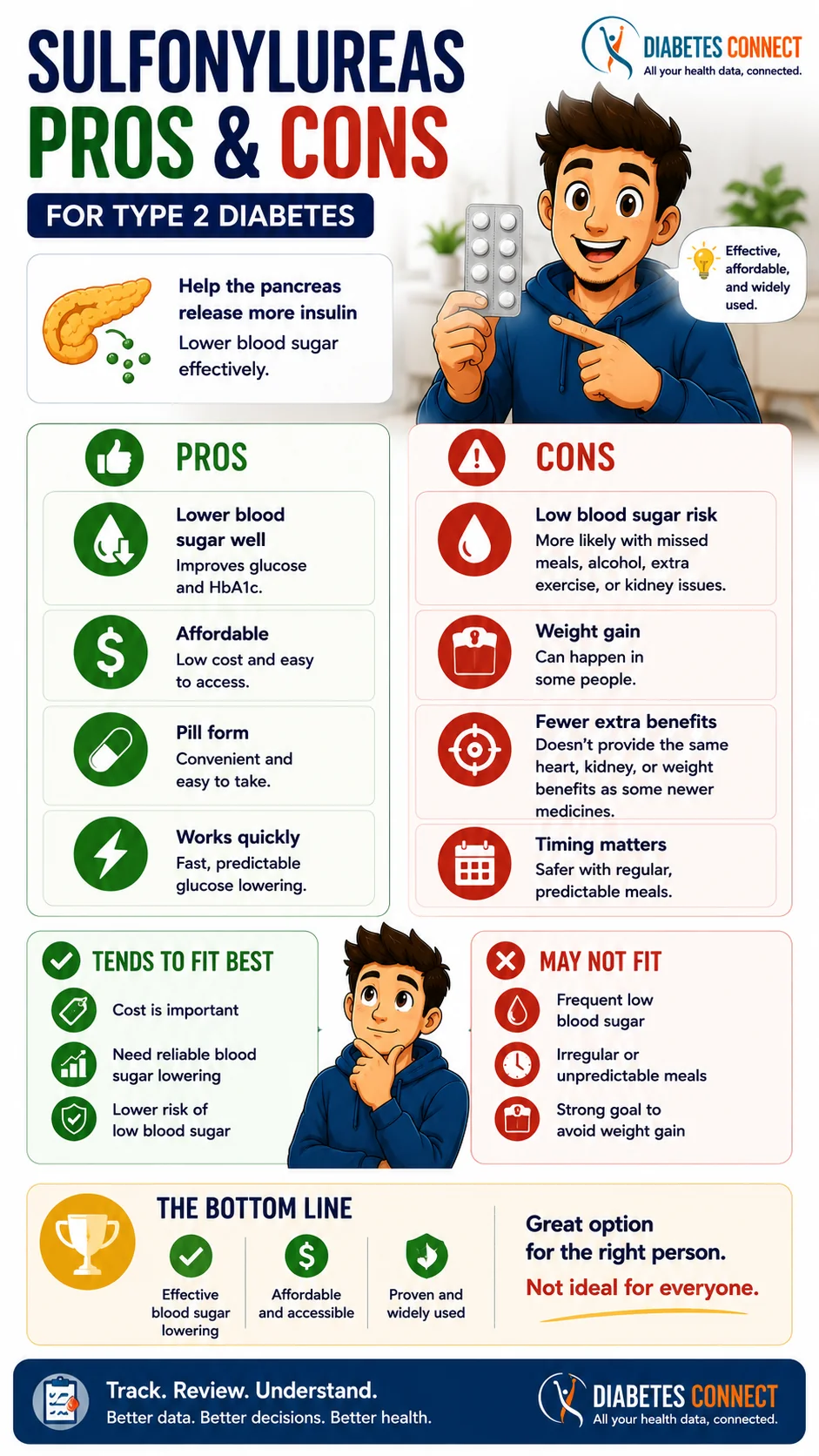
Sulfonylureas are older type 2 diabetes medicines, but they are still widely used.
The reason is simple: they usually work, they work quickly, and they are often low cost.
The tradeoff is equally important. They can increase the risk of low blood sugar and may contribute to weight gain, which makes them a better fit for some people than others.
What sulfonylureas do
Sulfonylureas help the pancreas release more insulin.
Common examples include glipizide, glyburide, gliclazide, and glimepiride.
Because they encourage the body to make more insulin, they often lower blood sugar effectively. That is their main strength.
However, that same action explains their main limitation: insulin can continue working even when food intake is lower than expected, which increases the risk of hypoglycemia.
The main pros
They lower blood sugar well.
Sulfonylureas can reduce glucose levels and improve HbA1c, especially when blood sugar is running high.
They are usually affordable.
This matters more than many articles admit. A medicine that is accessible and easy to refill is often more useful than one that sounds ideal but is difficult to afford long term.
They are available as pills.
For people who prefer oral medicines, that can be a practical advantage.
They often start working quickly.
Some newer medicines have additional benefits, but sulfonylureas remain a reasonable option when a fast and predictable glucose-lowering effect is the main goal.
The main cons
Low blood sugar is the big one.
This is the best-known risk of sulfonylureas. Lows are more likely if you skip meals, eat much less than usual, drink alcohol, exercise more than expected, or have reduced kidney function.
Weight gain can happen.
Not everyone gains weight, but it is a recognised downside. If weight loss is an important treatment goal, other medication classes may fit better.
They do not address every treatment goal.
A sulfonylurea can lower glucose, but it does not usually provide the same added benefits that some newer medicines offer for weight management, cardiovascular disease, or kidney protection.
They need more attention to timing.
These medicines are easier to use safely when meals are reasonably regular. If your eating schedule is unpredictable, the risk-benefit balance can change.
Not all sulfonylureas are identical
Although they belong to the same medication class, some sulfonylureas carry a higher risk of hypoglycemia than others.
Glyburide is a common example that often receives extra caution, particularly in older adults. Gliclazide and glimepiride are frequently considered lower-risk options in many situations.
The best choice depends on the individual, not just the drug class.
Who they tend to fit best
Sulfonylureas often make the most sense when cost matters, blood sugar needs to come down reliably, and the person has a lower risk of hypoglycemia.
They may be less attractive when someone has frequent low blood sugar, irregular meals, significant kidney problems, or a strong goal of avoiding weight gain.
A simple example: if two medicines lower glucose similarly but one is much more affordable, that can be a real advantage. But if the cheaper option causes repeated lows during missed lunches, it may stop being the better choice.
That is why the "best" diabetes medicine is rarely just about glucose numbers.
Questions worth asking your doctor
Ask practical questions, not just drug-name questions.
- How likely is low blood sugar with this specific sulfonylurea?
- What should I do if I miss a meal?
- Is this a good choice with my kidney function and age?
- How might this affect my weight?
- Would another medicine fit better if cost were not the main issue?
How DiabetesConnect can help
If you start a sulfonylurea, tracking blood sugar around meals can help make the real-world tradeoffs clearer.
DiabetesConnect can help you log blood glucose, meals, weight, HbA1c, medication records, and longer-term trends in one place, making it easier to review whether a treatment is improving control without causing too many lows.
Doctor note
Sulfonylureas are not "bad" drugs. They are useful drugs with clear strengths and clear limitations.
In clinic, the key question is usually not whether they work. It is whether they fit the person in front of you. Meal routine, kidney function, budget, age, weight goals, and risk of hypoglycemia all matter.
If a medicine is causing frequent lows, confusion around meals, or unwanted weight gain, that is worth revisiting with your clinician rather than simply trying to push through it.
Takeaway
The pros of sulfonylureas are straightforward: effective blood sugar lowering, low cost, and easy access.
The cons are equally clear: low blood sugar risk, possible weight gain, and fewer added benefits than some newer medication classes.
For the right person, they can be a solid choice. For the wrong person, they can create avoidable problems.
Important reminder
This article is educational only and is not medical advice. Medication decisions should always be made with your own clinician.
Part of guide
Diabetes Medicines Guide
Explore articles on metformin, GLP-1 medicines, sulfonylureas, dosing questions, and what to monitor while treatment changes.
Open topic hubMake the next step easier
Keep the useful bits from this guide in one place.
Track meals, blood sugar, weight, and diabetes trends together so your notes are easier to understand at the next appointment.