By Dr Ryizan Nizar MD, MRCP UK (Diabetes and Endocrinology), CCT
Last updated 19 July 2026
Pros and Cons of Statins for People With Diabetes
A practical look at the benefits, downsides, and common questions about statins for people with diabetes, including side effects, heart risk, and what to discuss with your clinician.
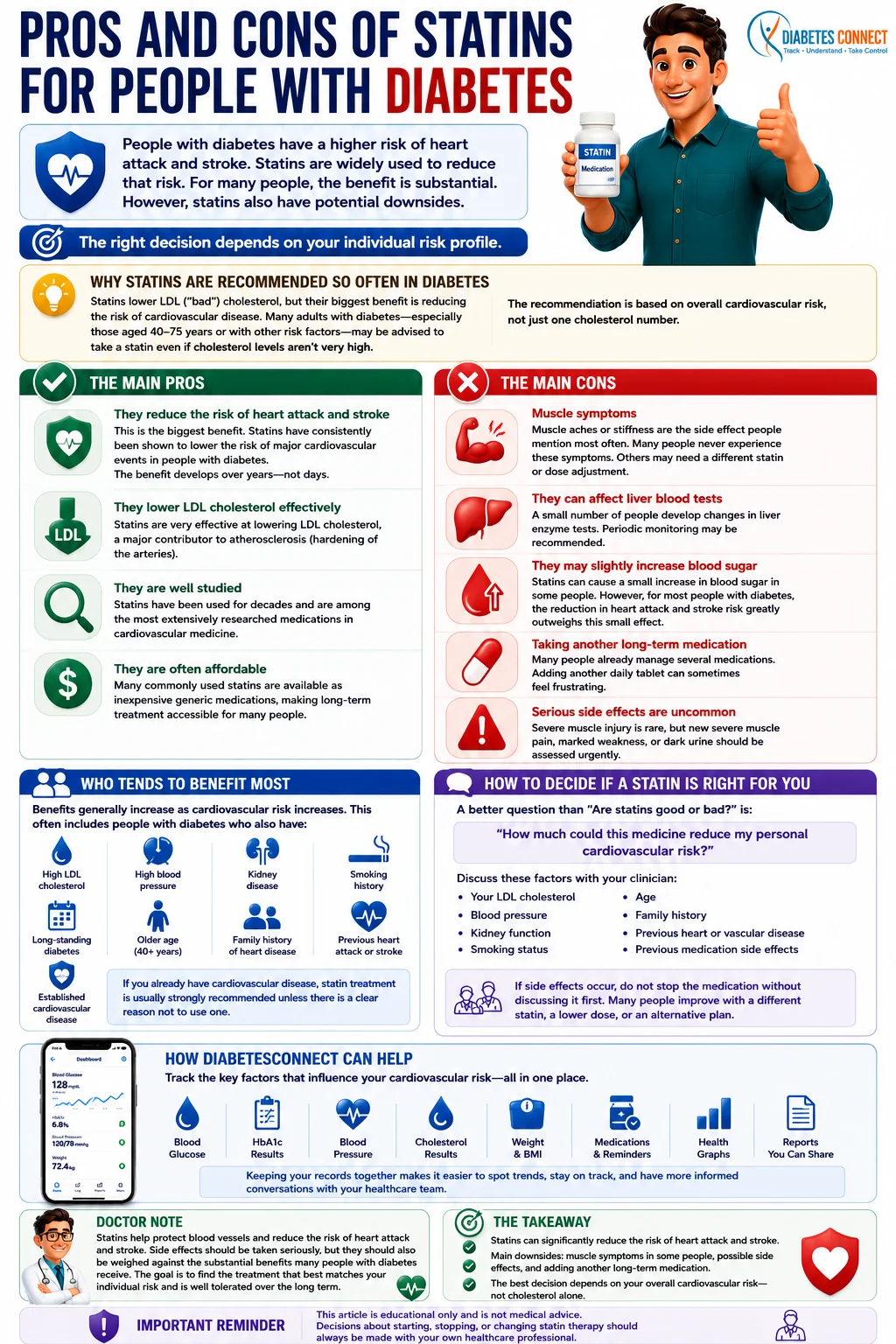
Statins are discussed frequently in diabetes care because protecting your heart is just as important as managing your blood sugar.
People with diabetes have a higher risk of heart attack and stroke than people without diabetes. Statins are commonly prescribed to reduce that risk. For many people, that benefit is substantial. However, statins also have potential downsides, and deciding whether they are right for you should be based on your individual risk profile.
Why statins are recommended so often in diabetes
Statins are medicines that lower LDL (“bad”) cholesterol, but their biggest benefit is reducing the risk of cardiovascular disease.
That matters because diabetes affects much more than blood sugar. High blood pressure, abnormal cholesterol, kidney disease, and damage to blood vessels often occur alongside diabetes and all contribute to long-term cardiovascular risk.
For this reason, many adults with diabetes—particularly those aged 40 to 75 years or those with additional cardiovascular risk factors—may be advised to take a statin even if their cholesterol levels are not dramatically elevated.
The recommendation is based on overall cardiovascular risk, not just one cholesterol number.
The main pros
They reduce the risk of heart attack and stroke
This is the biggest benefit.
Statins have consistently been shown to lower the risk of major cardiovascular events in people with diabetes.
The benefit develops over years rather than days or weeks. You do not take a statin to feel different immediately—you take it to reduce the likelihood of serious cardiovascular disease in the future.
They lower LDL cholesterol effectively
Statins are very effective at lowering LDL cholesterol, which is one of the major contributors to atherosclerosis (hardening of the arteries).
They are well studied
Statins have been used for decades and are among the most extensively researched medications in cardiovascular medicine.
They are often affordable
Many commonly used statins are available as inexpensive generic medications, making long-term treatment accessible for many people.
The main cons
Muscle symptoms
Muscle aches or stiffness are the side effect people mention most often.
Many people never experience these symptoms, while others may need to switch to another statin or adjust the dose.
They can affect liver blood tests
A small number of people develop changes in liver enzyme tests, which is why periodic monitoring may be recommended.
They may slightly increase blood sugar
Statins can cause a small increase in blood sugar in some people.
However, for most people with diabetes, the reduction in heart attack and stroke risk greatly outweighs this small effect.
Taking another long-term medication
Many people already manage several medications for diabetes, blood pressure, or other conditions. Adding another daily tablet can sometimes feel frustrating.
Serious side effects are uncommon
Severe muscle injury is rare, but new severe muscle pain, marked weakness, or dark urine should be assessed urgently.
Who tends to benefit most
The benefits of statins generally become greater as cardiovascular risk increases.
That often includes people with diabetes who also have:
- high LDL cholesterol
- high blood pressure
- kidney disease
- a smoking history
- long-standing diabetes
- older age
- a previous heart attack or stroke
- established cardiovascular disease
If you already have cardiovascular disease, statin treatment is usually strongly recommended unless there is a clear reason not to use one.
How to decide if a statin is right for you
A better question than “Are statins good or bad?” is:
“How much could this medicine reduce my personal cardiovascular risk?”
Useful topics to discuss with your clinician include:
- your LDL cholesterol
- blood pressure
- kidney function
- smoking status
- age
- family history
- previous heart or vascular disease
- previous medication side effects
If side effects occur, do not stop the medication without discussing it first. Many people improve with a different statin, a lower dose, or an alternative treatment plan.
How DiabetesConnect can help
DiabetesConnect helps you monitor many of the factors that influence cardiovascular risk in one place.
You can track:
- blood glucose
- HbA1c
- blood pressure
- cholesterol results
- weight and BMI
- medication records and reminders
- long-term health graphs
- printable health reports
Keeping these records together makes it easier to review trends and have more informed discussions with your healthcare team.
Doctor note
Many people think statins are simply cholesterol tablets.
In reality, they are prescribed because they help protect blood vessels and reduce the risk of heart attack and stroke.
Side effects should always be taken seriously, but they should also be weighed against the substantial cardiovascular benefits many people with diabetes receive. The goal is to find the treatment that best matches your individual risk and is well tolerated over the long term.
Takeaway
For many people with diabetes, the biggest advantage of statins is reducing the risk of heart attack and stroke.
The main disadvantages are muscle symptoms in some people, possible side effects, and adding another long-term medication.
The best decision depends on your overall cardiovascular risk rather than cholesterol alone.
Important reminder
This article is educational only and is not medical advice. Decisions about starting, stopping, or changing statin therapy should always be made with your own healthcare professional.
Part of guide
Diabetes Medicines Guide
Explore articles on metformin, GLP-1 medicines, sulfonylureas, dosing questions, and what to monitor while treatment changes.
Open topic hubMake the next step easier
Keep the useful bits from this guide in one place.
Track meals, blood sugar, weight, and diabetes trends together so your notes are easier to understand at the next appointment.