By Dr Ryizan Nizar MD, MRCP UK (Diabetes and Endocrinology), CCT
Last updated 9 June 2026
Pros and Cons of Gliclazide for Type 2 Diabetes
A clear, practical look at the pros and cons of gliclazide for type 2 diabetes, including benefits, downsides, hypoglycemia risk, weight effects, and when to speak with your clinician.
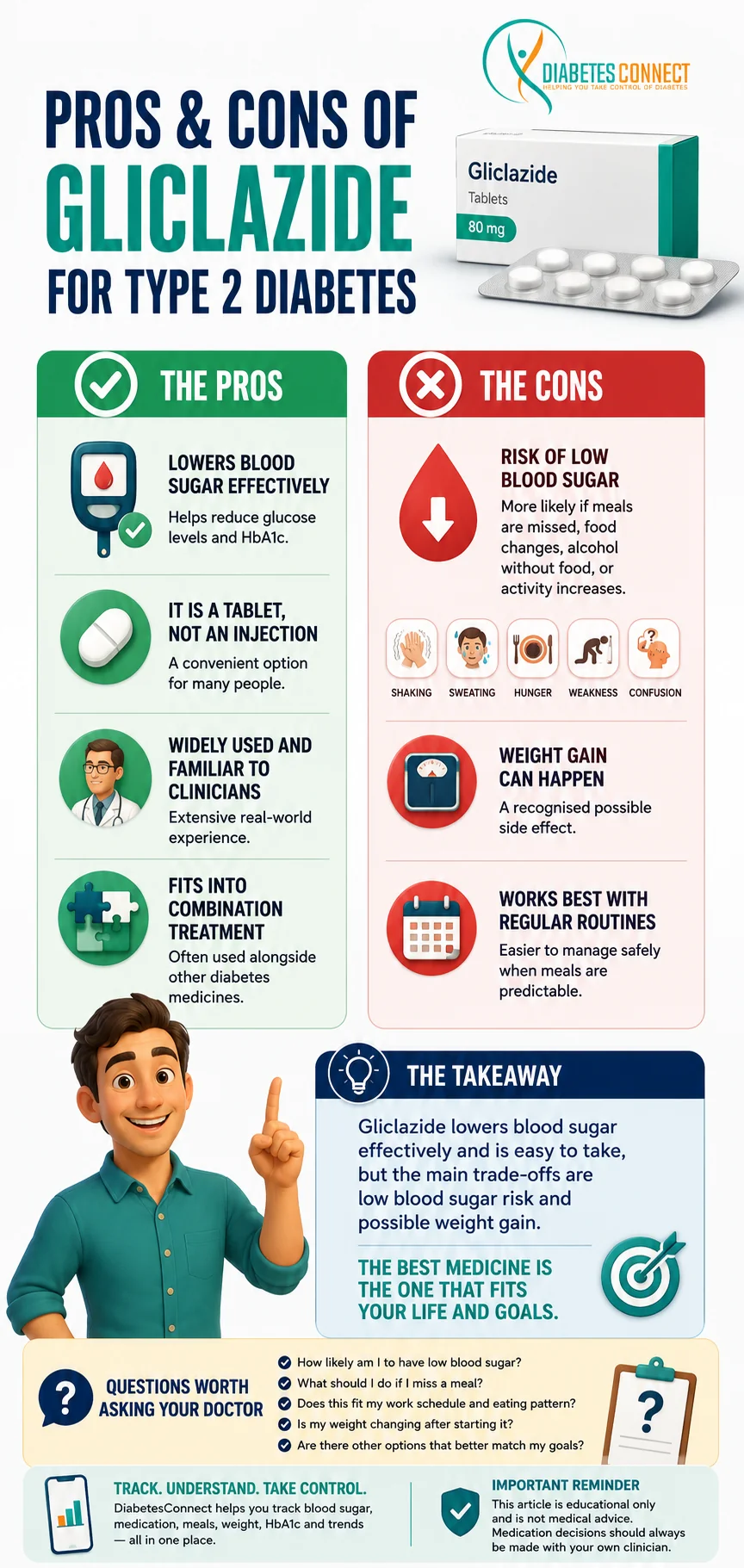
Gliclazide is a common tablet used for type 2 diabetes. It can lower blood sugar effectively, but like every medication, it has strengths and trade-offs.
The key question is not just whether it works. It is whether the benefits fit your daily routine, risk of low blood sugar, and overall treatment goals.
What gliclazide does
Gliclazide belongs to the sulfonylurea group of medicines. It works by helping the pancreas release more insulin.
That means it can lower blood sugar fairly quickly and may be useful when glucose levels remain above target despite lifestyle changes or other treatments.
However, because it increases insulin release, blood sugar can sometimes fall too low, especially when food intake or routines change.
The main pros
It usually lowers blood sugar effectively.
Gliclazide can reduce glucose levels and improve HbA1c, especially when blood sugar levels are running high.
It is a tablet, not an injection.
For people who prefer oral medicines, this can be a practical advantage.
It is widely used and familiar to clinicians.
Doctors have extensive real-world experience with gliclazide, and it remains a commonly used treatment option.
It can fit into combination treatment.
Gliclazide is often used alongside other diabetes medicines rather than as the only part of a treatment plan.
The main cons
Low blood sugar is the main concern.
This is the most important risk. Low blood sugar (hypoglycemia) is more likely if meals are missed, food intake changes, alcohol is taken without enough food, or activity levels suddenly increase.
Symptoms may include:
- shaking
- sweating
- hunger
- weakness
- confusion
Weight gain can happen.
Not everyone gains weight, but it is a recognised possible side effect. If weight loss is an important treatment goal, another medication class may sometimes fit better.
It works best with regular routines.
Gliclazide is usually easier to manage safely when meals are reasonably predictable.
If eating times change frequently, the balance between benefit and risk may need reviewing.
How gliclazide compares with some other sulfonylureas
Not all sulfonylureas are exactly the same.
Gliclazide is commonly used in many countries and is often considered to have a lower risk of hypoglycemia than some older sulfonylureas, although low blood sugar can still happen.
The safest option depends on the person, their health, and their routine.
Who tends to do well with it
Gliclazide often suits people who need stronger glucose lowering and have a fairly regular meal pattern.
It may be less suitable when someone:
- has frequent low blood sugar episodes
- regularly skips meals
- has certain kidney problems
- wants to prioritise avoiding weight gain
A simple example: someone who eats meals at predictable times may find gliclazide easier to manage than someone whose work schedule means meals are frequently missed or delayed.
The best diabetes medication is rarely just about lowering glucose. It is about finding the right fit.
Questions worth asking your doctor
Useful questions include:
- How likely am I to have low blood sugar with this medicine?
- What should I do if I miss a meal?
- Does this fit my work schedule and eating pattern?
- Is my weight changing after starting it?
- Are there other options that better match my goals?
How DiabetesConnect can help
If you take gliclazide, tracking patterns can be useful.
DiabetesConnect can help you record blood sugar readings, medication routines, meals, weight, HbA1c, and longer-term trends in one place.
This can make it easier to review whether glucose levels are improving while also noticing patterns such as possible lows around meals or activity.
Doctor note
Gliclazide is not a weak or outdated medicine. For the right person, it can work very well.
The main issue is fit.
A medicine that lowers glucose effectively is not automatically the best choice if it causes frequent lows, unwanted weight gain, or does not match someone’s daily routine.
The best treatment plan improves blood sugar without creating new problems that are difficult to manage.
Takeaway
Gliclazide’s main advantages are effective blood sugar lowering, tablet form, and long experience of use.
Its main limitations are the risk of low blood sugar and possible weight gain.
For some people it remains a very useful option. For others, different treatments may better match their needs and goals.
Important reminder
This article is educational only and is not medical advice. Medication decisions should always be made with your own clinician.
Part of guide
Diabetes Medicines Guide
Explore articles on metformin, GLP-1 medicines, sulfonylureas, dosing questions, and what to monitor while treatment changes.
Open topic hubMake the next step easier
Keep the useful bits from this guide in one place.
Track meals, blood sugar, weight, and diabetes trends together so your notes are easier to understand at the next appointment.