By Dr Ryizan Nizar MD, MRCP UK (Diabetes and Endocrinology), CCT
Last updated 7 June 2026
Orforglipron (Foundayo) Pros and Cons for Weight Loss With Type 2 Diabetes
A practical look at the pros and cons of orforglipron (Foundayo) for weight loss in people with type 2 diabetes, including likely benefits, limits, side effects, and questions to ask your clinician.
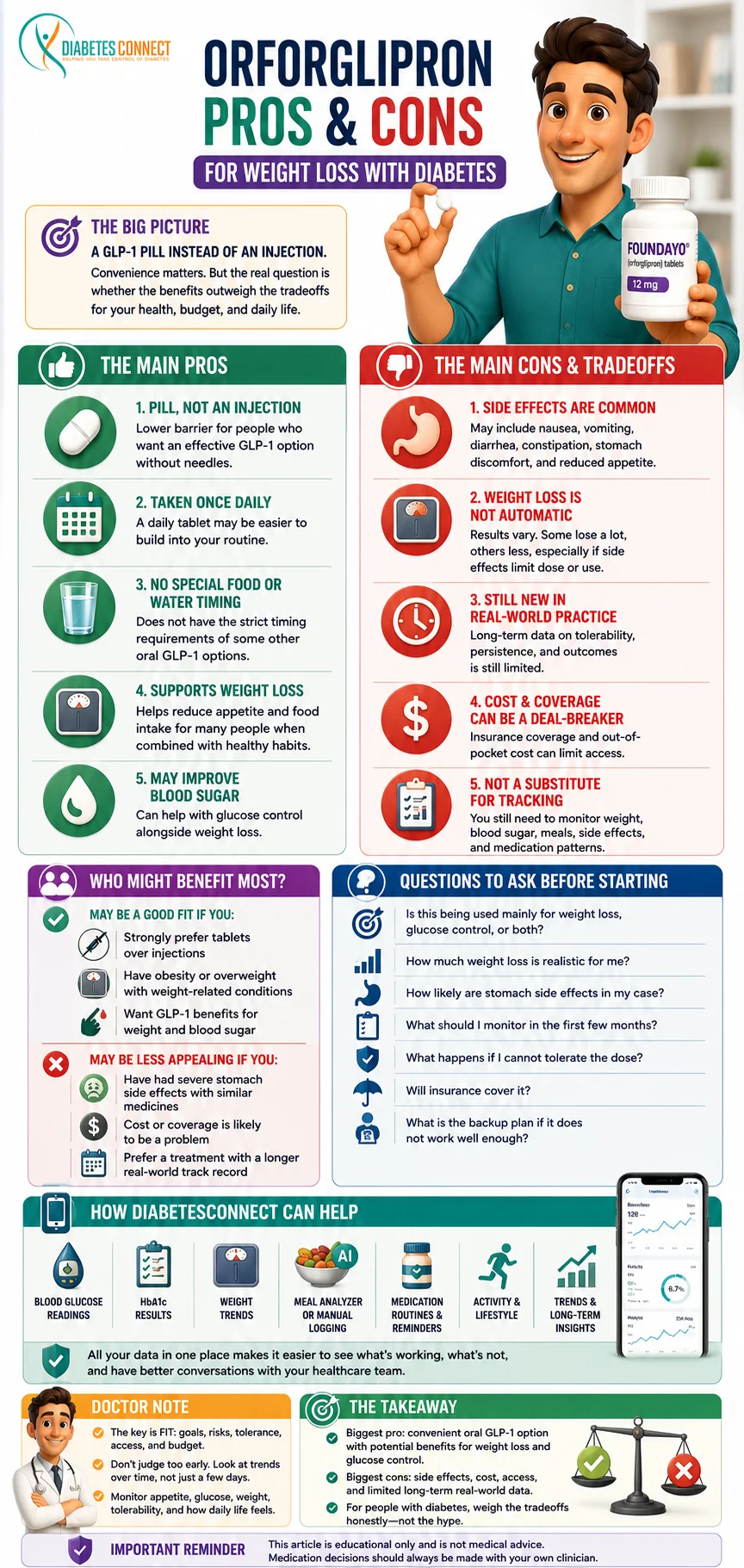
Orforglipron, marketed as Foundayo, is an oral GLP-1 medicine approved in the United States for chronic weight management in adults with obesity, or some adults with overweight and weight-related health problems.
For many people, the headline is simple: a GLP-1 pill instead of an injection.
But convenience is only one part of the decision. The real question is whether the benefits outweigh the tradeoffs for your health, diabetes control, budget, and daily life.
Why this matters
If you have diabetes and are trying to lose weight, treatment choices affect more than the number on the scale.
They may also affect:
- appetite
- food intake
- blood sugar patterns
- side effects
- weight trends
- how sustainable the plan feels
That is why a pros-and-cons view is more useful than hype. A medicine can be promising and still be the wrong fit for a specific person.
The main pros of orforglipron
1. It is a pill, not an injection.
This is the biggest practical advantage.
Some people avoid GLP-1 treatment because they do not want injections, even when that type of treatment may otherwise be suitable. An oral option lowers that barrier.
2. It is taken once daily.
Orforglipron is designed as a daily tablet. For some people, that may feel easier to build into a routine than a weekly injection.
3. It does not have the same food and water timing restrictions as some other oral GLP-1 options.
This may make it more convenient for daily use.
4. It can support weight loss.
As a GLP-1 receptor agonist, orforglipron can reduce appetite and food intake in many people.
For people with type 2 diabetes and excess weight, that can be meaningful when combined with diet, activity, and ongoing medical care.
5. It may also help blood sugar control.
For diabetes care, weight loss alone is not the only issue.
A treatment becomes more useful when it also helps glucose control, which is one reason GLP-1 medicines matter in practice.
The main cons and tradeoffs
1. Side effects are still a major issue.
Like other GLP-1 medicines, orforglipron can cause stomach-related side effects.
These may include:
- nausea
- vomiting
- diarrhea
- constipation
- stomach discomfort
- reduced appetite
For some people these are manageable. For others, side effects are the reason treatment is stopped.
2. Weight loss is not automatic.
Even strong weight-loss medicines do not work the same way for everyone.
Some people lose substantial weight. Others see a smaller change than expected, especially if side effects limit dose increases or long-term use.
3. It is still new in real-world practice.
Approval is important, but it is not the same as years of routine use across a broad population.
Doctors and patients will still be watching long-term tolerability, persistence, access, and real-world outcomes.
4. Cost and coverage can be a deal-breaker.
A medicine can be clinically appealing and still be unrealistic if insurance does not cover it or the out-of-pocket cost is high.
For many people, access matters as much as the medical pros and cons.
5. It is not a substitute for tracking.
If a treatment changes appetite, weight, or blood sugar, you still need a way to see what is actually happening over time.
Weight, glucose, meals, side effects, and medication patterns all matter.
Who might benefit most
Orforglipron may interest people with obesity or overweight who want a GLP-1-based option but strongly prefer tablets over injections.
It may be especially attractive if injection hesitation has been the main barrier.
It may be less appealing if you have had severe stomach side effects with similar medicines, if cost is likely to be a problem, or if you prefer a treatment with a longer real-world track record.
A simple example: if one person avoids injectable treatment mainly because of needle anxiety, an oral option changes the conversation.
But if another person stopped a similar medicine because of severe nausea, the pill format does not automatically solve the main problem.
Questions worth asking before starting
Useful questions include:
- Is this being used mainly for weight loss, glucose control, or both?
- How much weight loss is realistic for me?
- How likely are stomach side effects in my case?
- What should I monitor in the first few months?
- What happens if I cannot tolerate the dose?
- Will insurance cover it?
- What is the backup plan if it does not work well enough?
These questions usually lead to a better decision than asking only whether the drug is “good” or “bad.”
How DiabetesConnect can help
If you start a medicine that affects appetite, weight, or blood sugar, tracking patterns can be useful.
DiabetesConnect can help you record:
- blood glucose readings
- HbA1c results
- weight trends
- meals using the AI Meal Analyzer or manual logging
- medication routines and reminders
- activity and longer-term health trends
Having these records together can make it easier to see whether treatment is helping enough to justify the side effects, cost, and daily routine.
Doctor note
The biggest mistake with new weight-loss medicines is treating them like simple yes-or-no options.
In real diabetes care, the better question is fit: does this medication match the person’s risks, goals, tolerance, access, and budget?
Also, do not judge too early from a few days of side effects or a single weigh-in.
The decision usually depends on trends over time: appetite, glucose, weight, tolerability, and whether daily life feels easier or harder on treatment.
Takeaway
The biggest pro of orforglipron is convenience as an oral GLP-1 option with potential benefits for weight loss and glucose control.
The biggest cons are side effects, cost, access, and limited long-term real-world experience compared with older treatments.
For people with diabetes, it is most useful when those tradeoffs are weighed honestly rather than compared to hype.
Important reminder
This article is educational only and is not medical advice. Medication decisions should always be made with your own clinician.
Part of guide
Diabetes Medicines Guide
Explore articles on metformin, GLP-1 medicines, sulfonylureas, dosing questions, and what to monitor while treatment changes.
Open topic hubMake the next step easier
Keep the useful bits from this guide in one place.
Track meals, blood sugar, weight, and diabetes trends together so your notes are easier to understand at the next appointment.