By Dr Ryizan Nizar MD, MRCP UK (Diabetes and Endocrinology), CCT
Last updated 9 June 2026
Is a Tuna Sandwich Good for Diabetes?
A tuna sandwich can work well for diabetes. The biggest factors are bread, portion size, mix-ins, and sides. Here’s how to make it more blood sugar-friendly.
Short answer: yes, often
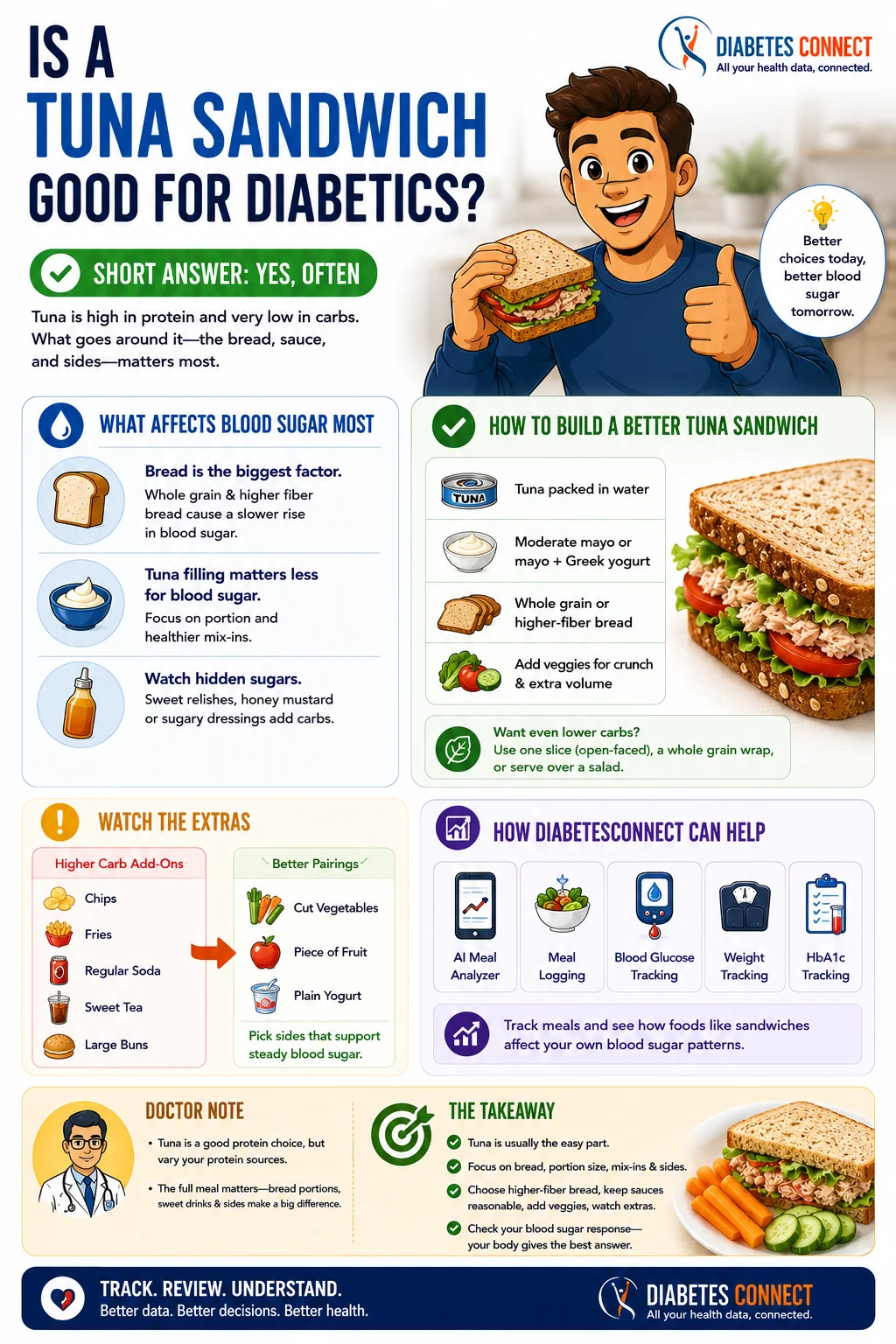
A tuna sandwich can be a good choice for someone with diabetes.
Tuna provides protein with very little carbohydrate. That means the tuna itself usually does not raise blood sugar much. The bigger question is what goes around it: the bread, the mayo-heavy mix, and the chips or sweet drink on the side.
Why this matters: many sandwiches look similar but affect blood sugar very differently. A tuna sandwich on whole grain bread with vegetables is not the same as tuna salad on white bread with fries.
What affects blood sugar most
The main blood sugar driver is usually the bread.
Two slices of white bread can raise blood sugar faster than a higher-fiber whole grain option. Fiber can slow digestion and often leads to a steadier rise in blood sugar. Portion size matters too. A large deli sandwich can contain far more carbohydrate than a simple homemade one.
The tuna filling matters less for blood sugar, but it still matters for overall health. Plain tuna is a lean source of protein, and protein can help make a meal more filling. If the tuna is mixed with a lot of regular mayo, the issue is usually extra calories rather than extra carbohydrates.
If your sandwich includes sweet pickle relish, honey mustard, or a sugary dressing, that can add more carbohydrate than people expect.
How to build a better tuna sandwich
Keep the basic formula simple: protein, better carbohydrates, and some crunch from vegetables.
A more diabetes-friendly tuna sandwich usually looks like this:
- tuna packed in water
- a moderate amount of mayo, or part mayo and part Greek yogurt
- whole grain or other higher-fiber bread
- lettuce, tomato, cucumber, or celery for extra volume
This approach helps in two ways: it keeps carbohydrates more reasonable and can make the meal more satisfying.
If you want to lower carbohydrates further, you can use one slice of bread as an open-faced sandwich, put the tuna in a whole grain wrap, or eat it over a salad instead.
A simple example: tuna salad on two slices of seeded whole grain bread with tomato and lettuce will usually work better for blood sugar than the same tuna mix on a large white hoagie roll.
Watch the extras
A decent sandwich can quickly turn into a higher-carbohydrate meal because of the sides.
Common add-ons that may raise blood sugar more quickly include:
- chips
- fries
- regular soda
- sweet tea
- large bakery-style buns
Better pairings may include cut vegetables, a piece of fruit, or plain yogurt, depending on your meal plan and usual carbohydrate target.
This is where food tracking can help. Some people handle bread well at lunch and not as well at dinner. Others notice differences depending on activity levels or portion sizes.
How DiabetesConnect can help
DiabetesConnect includes an AI Meal Analyzer, meal logging, blood glucose tracking, weight tracking, and HbA1c tracking in one place.
Logging meals alongside blood sugar readings can help you understand how foods such as sandwiches affect your own glucose patterns rather than relying only on general advice.
Doctor note
Tuna is a practical protein choice for diabetes, but variety still matters. It is sensible to rotate protein sources during the week rather than relying on tuna every day.
Also pay attention to the full meal, not just one ingredient. In clinic, some of the biggest blood sugar surprises come from bread portions, sweet drinks, and sides that people barely count.
The takeaway
Yes, a tuna sandwich can be a good choice for many people with diabetes.
The tuna is usually the easy part. The real decision points are the bread, the portion size, the mix-ins, and the sides. Choose higher-fiber bread, keep sauces reasonable, add vegetables, and watch the extras.
If you want the most useful answer for your own body, check your blood sugar response after the meal. That often tells you more than any generic food rule.
Important reminder
This article is educational only and is not medical advice. Personal dietary advice should come from your own clinician or diabetes care team.
Part of guide
Diabetes Food Guide
Browse diabetes food guides covering fruit, drinks, protein, meal choices, and what to watch for in day-to-day eating.
Open topic hubMake the next step easier
Keep the useful bits from this guide in one place.
Track meals, blood sugar, weight, and diabetes trends together so your notes are easier to understand at the next appointment.