By Dr Ryizan Nizar MD, MRCP UK (Diabetes and Endocrinology), CCT
Last updated 24 May 2026
HbA1c Ranges Explained
A practical explanation of what HbA1c ranges are trying to show, and why repeated tracking matters more than reacting to one number in isolation.
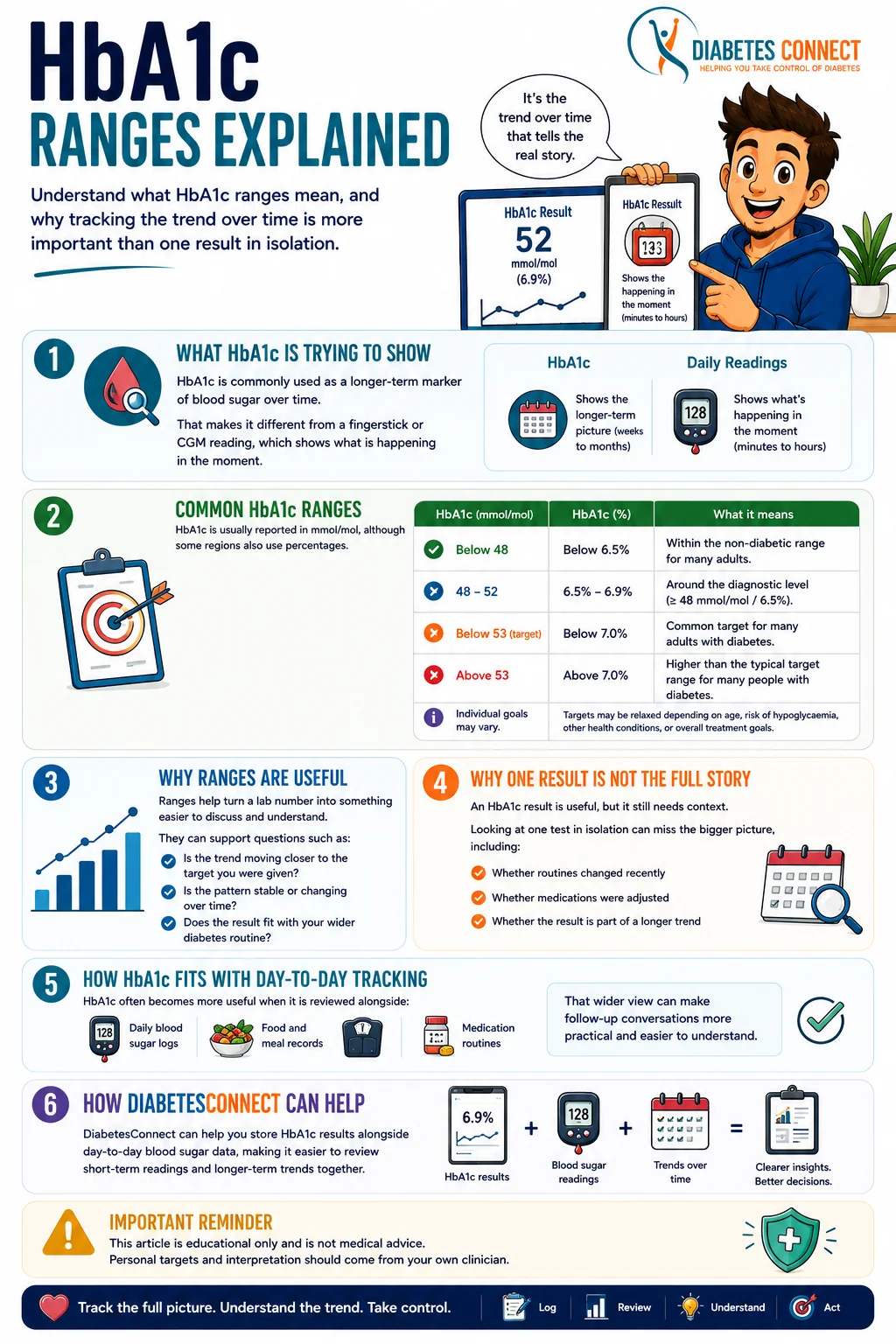
HbA1c is often discussed in terms of ranges or targets, but the number usually makes more sense when it is understood as part of a longer pattern rather than as a one-off result.
What HbA1c is trying to show
HbA1c is commonly used as a longer-term marker of blood sugar over time.
That makes it different from a fingerstick or CGM reading, which shows what is happening in the moment.
Common HbA1c ranges
HbA1c is usually reported in mmol/mol, although some regions also use percentages.
For many adults with diabetes, an HbA1c below 53 mmol/mol (7.0%) is often discussed as a common target.
An HbA1c of 48 mmol/mol (6.5%) or above is commonly used as part of the diagnostic criteria for diabetes.
Results above 53 mmol/mol (7.0%) are often considered higher than the typical target range for many people with diabetes, although individual goals may differ.
In some situations, targets may be relaxed slightly depending on factors such as age, risk of hypoglycaemia, other health conditions, or overall treatment goals.
Why ranges are useful
Ranges can help turn a lab number into something easier to discuss and understand.
They can support questions such as:
- is the trend moving closer to the target you were given?
- is the pattern stable or changing over time?
- does the result fit with your wider diabetes routine?
Why one result is not the full story
An HbA1c result is useful, but it still needs context.
Looking at one test in isolation can miss the bigger picture, including:
- whether routines changed recently
- whether medications were adjusted
- whether the result is part of a longer trend
How HbA1c fits with day-to-day tracking
HbA1c often becomes more useful when it is reviewed alongside:
- daily blood sugar logs
- food and meal records
- weight trends
- medication routines
That wider view can make follow-up conversations more practical and easier to understand.
How DiabetesConnect can help
DiabetesConnect can help you store HbA1c results alongside day-to-day blood sugar data, making it easier to review short-term readings and longer-term trends together.
Important reminder
This article is educational only and is not medical advice. Personal targets and interpretation should come from your own clinician.
Part of guide
HbA1c Guide
Read practical DiabetesConnect guides on HbA1c meaning, result ranges, and how HbA1c fits with daily glucose review.
Open topic hubMake the next step easier
Keep the useful bits from this guide in one place.
Track meals, blood sugar, weight, and diabetes trends together so your notes are easier to understand at the next appointment.