By Dr Ryizan Nizar MD, MRCP UK (Diabetes and Endocrinology), CCT
Last updated 14 June 2026
Fruits and Diabetes: Myths vs Facts
Do people with diabetes need to avoid fruit? Get the facts on sugar, portion size, juice, dried fruit, and the best way to fit fruit into a diabetes-friendly eating plan.
Why this matters
Fruit gets blamed for blood sugar problems more often than it should.
Many people with diabetes hear mixed messages: fruit is healthy, fruit has sugar, fruit should be avoided, fruit is better than dessert, and fruit juice counts the same.
Some of that is true. Some of it is not.
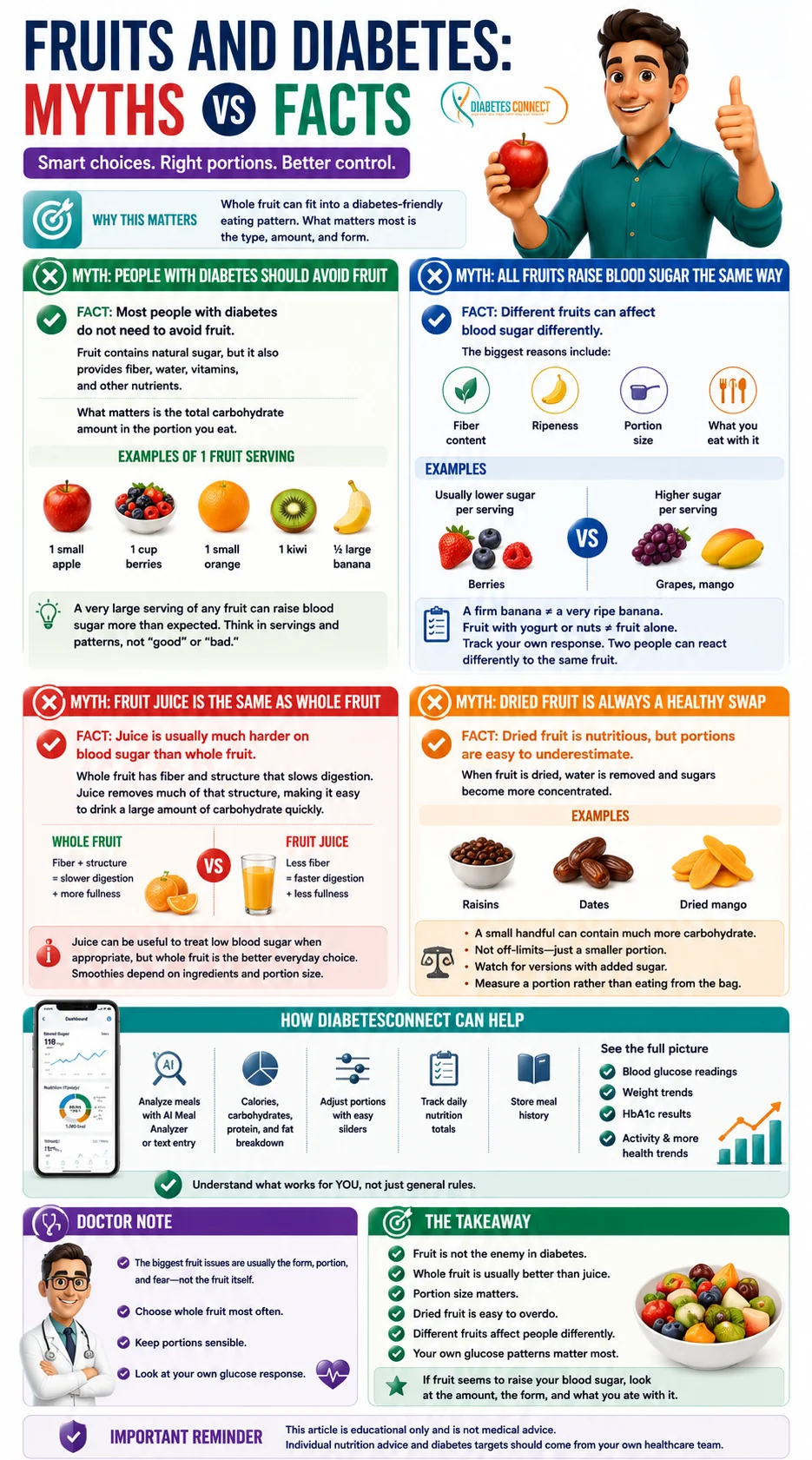
The key point: whole fruit can usually fit into a diabetes-friendly eating pattern. What matters most is the type, amount, and form.
Myth: People with diabetes should avoid fruit
Fact: Most people with diabetes do not need to avoid fruit.
Fruit contains natural sugar, but it also provides fiber, water, vitamins, and other nutrients.
That is very different from sugary drinks or sweets that contain sugar with little nutritional value.
What matters is the total carbohydrate amount in the portion you eat.
Examples that are often easier to fit in:
- a small apple
- a cup of berries
- a small orange
- one kiwi
- half a large banana
A very large serving of any fruit can raise blood sugar more than expected.
But that does not make fruit “bad.” It means portion size still matters.
A practical rule: think in servings and patterns, not labels like good or bad.
Myth: All fruits raise blood sugar the same way
Fact: Different fruits can affect blood sugar differently.
The biggest reasons include:
- fiber content
- ripeness
- portion size
- what you eat with the fruit
For example, berries usually contain less sugar per serving than larger portions of grapes or mango.
A firm banana may affect blood sugar differently from a very ripe banana. Fruit eaten with Greek yogurt or nuts may also lead to a different response than fruit eaten alone.
This is where personal tracking becomes useful.
Two people can eat the same fruit and see different glucose responses.
A simple example: a bowl of berries with plain yogurt is usually a different blood sugar experience than drinking a large glass of orange juice.
Myth: Fruit juice is the same as whole fruit
Fact: Juice is usually much harder on blood sugar than whole fruit.
Whole fruit contains fiber and structure that slows digestion.
Juice removes much of that structure. It becomes much easier to drink a large amount of carbohydrate quickly.
Compare:
- One orange takes time to eat and contains fiber.
- A glass of orange juice may contain several oranges' worth of sugar with much less fullness.
That does not mean juice is never useful.
For example, some people use fast-acting carbohydrates such as juice to treat low blood sugar when appropriate.
But as an everyday fruit choice, whole fruit is usually the better option.
Smoothies sit somewhere in the middle. Their effect depends on:
- how much fruit is used
- portion size
- whether protein, fat, or fiber is added
Myth: Dried fruit is always a healthy swap
Fact: Dried fruit is nutritious, but portions are easy to underestimate.
When fruit is dried, the water is removed and the sugars become more concentrated.
That means a small handful can contain much more carbohydrate than people expect.
Examples include:
- raisins
- dates
- dried mango
Dried fruit is not automatically off-limits. It usually just needs a smaller portion than fresh fruit.
Also watch for versions with added sugar.
A practical tip: if dried fruit is your choice, measure a portion rather than eating directly from the bag.
How DiabetesConnect can help
Everyone responds differently to food.
DiabetesConnect can help you understand your own patterns by letting you track:
- meals using the AI Meal Analyzer or text entry
- calories and carbohydrates
- protein and fat
- portion adjustments
- meal history
- blood glucose readings
- weight trends
- HbA1c results
Seeing meals and glucose patterns together can help you understand how different fruits and portions affect you personally.
Doctor note
In clinic, the biggest fruit problem is usually not the fruit itself.
It is often the form: juice, oversized smoothies, dried fruit portions, or very large servings eaten without noticing the carbohydrate total.
The other common issue is unnecessary fear.
Some people remove fruit completely and end up with a more restrictive diet than they need.
A better approach is usually:
- choose whole fruit most often
- keep portions sensible
- look at your own glucose response
Takeaway
Fruit is not the enemy in diabetes.
The main points are:
- whole fruit is usually a better choice than juice
- portion size matters
- dried fruit is easy to overdo
- different fruits affect people differently
- your own glucose patterns matter more than internet rules
If fruit seems to raise your blood sugar, do not assume you have to remove it completely.
First look at the amount, the form, and what you ate with it.
Important reminder
This article is educational only and is not medical advice. Individual nutrition advice and diabetes targets should come from your own healthcare team.
Part of guide
Diabetes Food Guide
Browse diabetes food guides covering fruit, drinks, protein, meal choices, and what to watch for in day-to-day eating.
Open topic hubMake the next step easier
Keep the useful bits from this guide in one place.
Track meals, blood sugar, weight, and diabetes trends together so your notes are easier to understand at the next appointment.