By Dr Ryizan Nizar MD, MRCP UK (Diabetes and Endocrinology), CCT
Last updated 27 June 2026
Diabetes Symptoms: 5 Warning Signs to Know
Learn 5 early warning signs of diabetes in adults, why they happen, and when to get checked. Clear, practical guidance on symptoms that should not be ignored.
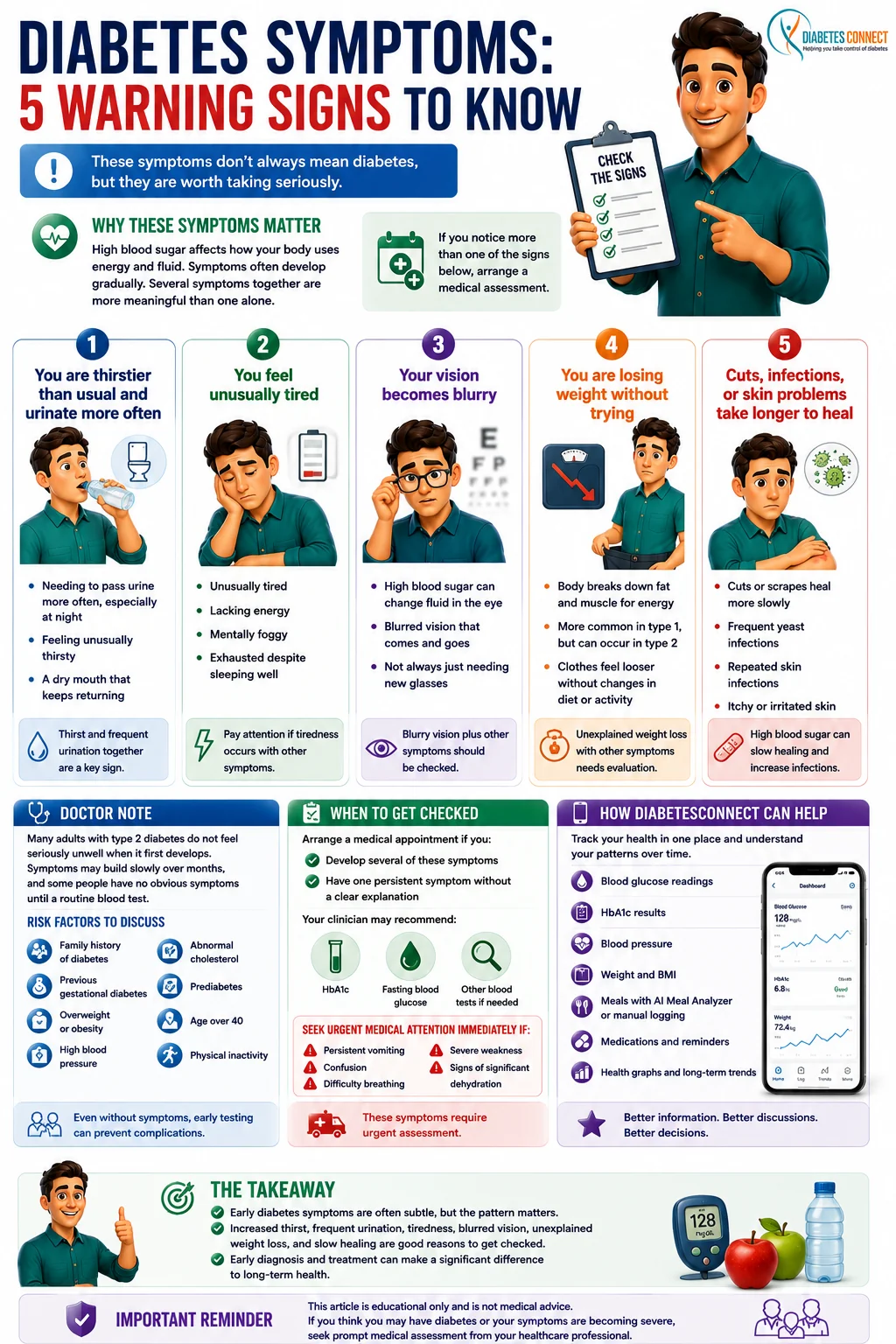
Some early warning signs of diabetes in adults are easy to overlook.
You feel more tired than usual. You are constantly thirsty. Your vision seems a little blurry.
These symptoms do not always mean diabetes, but they are worth taking seriously.
Early diabetes often develops gradually, and recognizing the signs sooner can help prevent weeks or months of untreated high blood sugar.
Why these symptoms matter
Diabetes symptoms develop when blood sugar stays high enough to affect how your body uses energy and fluid.
For many adults, the symptoms appear gradually rather than all at once.
One symptom by itself may not seem unusual. Several symptoms occurring together are much more meaningful.
If you notice more than one of the signs below, arrange a medical assessment.
- You are thirstier than usual and urinate more often
This is one of the most common early symptoms of diabetes.
When blood sugar becomes too high, the kidneys try to remove some of the extra glucose through the urine. This pulls additional water from the body.
You may notice:
- needing to pass urine more often, including during the night
- feeling unusually thirsty
- a dry mouth that keeps returning
When increased thirst and frequent urination occur together, diabetes becomes a more important possibility.
- You feel unusually tired
Feeling tired has many causes, but diabetes-related fatigue often feels different.
Although glucose is present in the bloodstream, the body cannot use it efficiently for energy.
This can leave you feeling:
- unusually tired
- lacking energy
- mentally foggy
- exhausted despite sleeping well
Pay particular attention if tiredness occurs alongside thirst, frequent urination, blurred vision, or increased hunger.
- Your vision becomes blurry
High blood sugar can temporarily change the fluid balance inside the eye.
This may cause blurred vision that comes and goes.
Many people assume they simply need new glasses or are tired.
However, new blurred vision combined with other diabetes symptoms should be assessed promptly.
- You are losing weight without trying
Unexpected weight loss can occur when the body cannot use glucose properly for energy.
Instead, it starts breaking down stored fat and muscle.
This symptom is often more noticeable in type 1 diabetes, but it can also occur in adults with type 2 diabetes, particularly when blood sugar levels are significantly elevated.
For example, if your eating habits have not changed but your clothes suddenly feel looser while you are also thirsty and tired, it is important to arrange a medical review.
- Cuts, infections, or skin problems take longer to heal
Persistently high blood sugar can slow healing and increase the risk of certain infections.
You may notice:
- cuts or scrapes healing more slowly than usual
- frequent yeast infections
- repeated skin infections
- itchy or irritated skin
This symptom is often overlooked because it does not immediately seem related to blood sugar.
Doctor note
Many adults with type 2 diabetes do not feel seriously unwell when diabetes first develops.
Symptoms may build slowly over months, and some people have no obvious symptoms until diabetes is detected during a routine blood test.
Risk factors also matter.
Screening is worth discussing with your clinician if you have:
- a family history of diabetes
- previous gestational diabetes
- overweight or obesity
- high blood pressure
- abnormal cholesterol
- prediabetes
Even without symptoms, early testing can identify diabetes before complications develop.
When to get checked
Arrange a medical appointment if you develop several of these symptoms or if one symptom persists without a clear explanation.
Your clinician may recommend tests such as:
- HbA1c
- fasting blood glucose
- additional blood tests if needed
Seek urgent medical attention immediately if you have:
- persistent vomiting
- confusion
- difficulty breathing
- severe weakness
- signs of significant dehydration
These symptoms require urgent assessment.
How DiabetesConnect can help
If you are being investigated for diabetes or have already been diagnosed, keeping your health information together can make follow-up appointments more useful.
DiabetesConnect allows you to track:
- blood glucose readings
- HbA1c results
- blood pressure
- weight and BMI
- meals using the AI Meal Analyzer or manual food logging
- medications and reminders
- health graphs and long-term trends
Having everything in one place makes it easier to review patterns with your healthcare team over time.
Takeaway
Early diabetes symptoms are often subtle, but the pattern matters.
Increased thirst, frequent urination, tiredness, blurred vision, unexplained weight loss, and slow healing are all good reasons to arrange a medical assessment rather than waiting for symptoms to improve on their own.
Early diagnosis and treatment can make a significant difference to long-term health.
Important reminder
This article is educational only and is not medical advice. If you think you may have diabetes or your symptoms are becoming severe, seek prompt medical assessment from your healthcare professional.
Part of guide
Early Signs and Symptoms of Diabetes
Explore articles on common early signs of diabetes, why symptoms happen, and when to seek medical assessment.
Open topic hubMake the next step easier
Keep the useful bits from this guide in one place.
Track meals, blood sugar, weight, and diabetes trends together so your notes are easier to understand at the next appointment.