By Dr Ryizan Nizar MD, MRCP UK (Diabetes and Endocrinology), CCT
Last updated 20 June 2026
Drinks People With Diabetes Should Avoid
Learn which drinks people with diabetes should avoid, why they raise blood sugar fast, and what to choose instead for better day-to-day control.
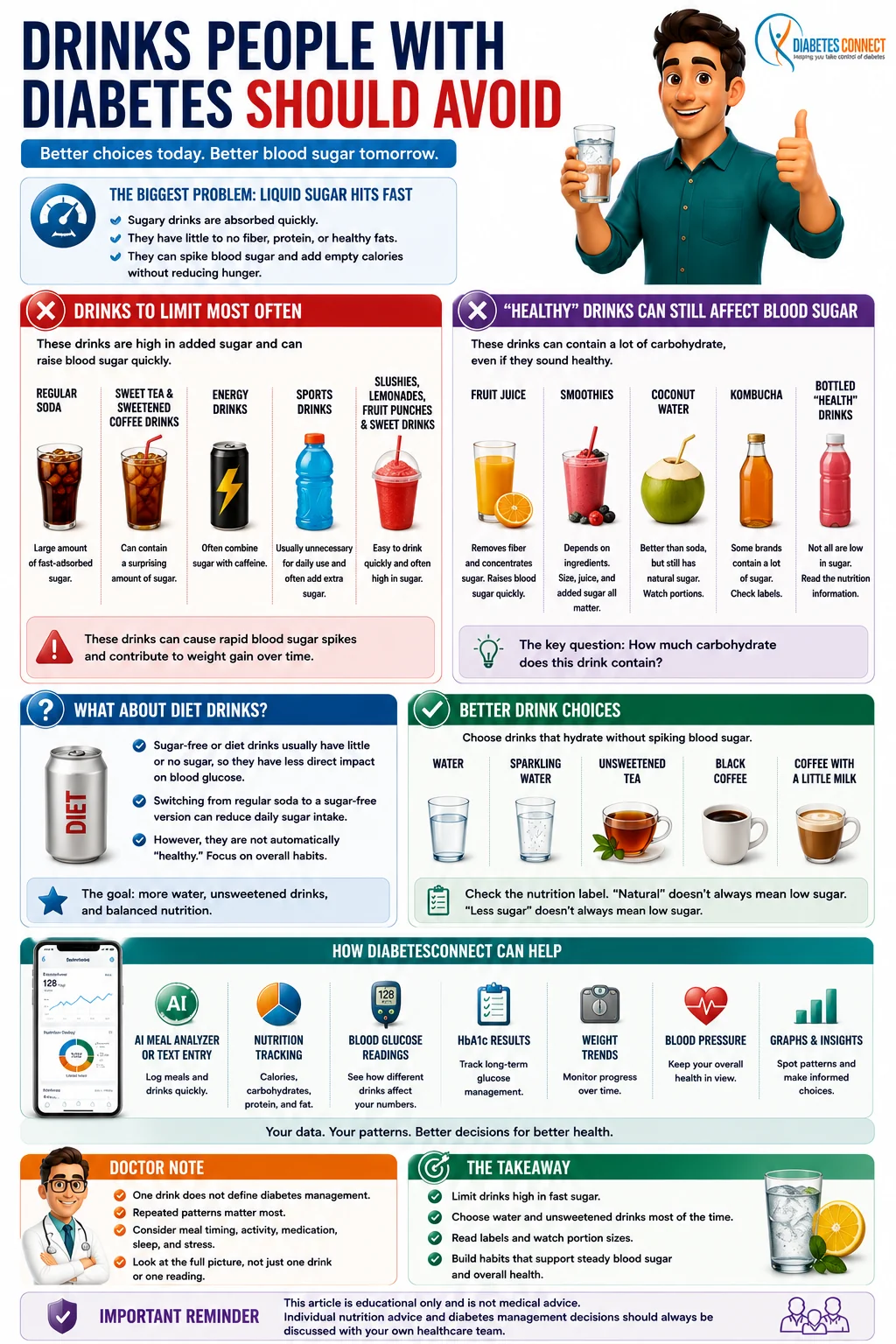
Some drinks can raise blood sugar faster than many foods.
They are also easy to overconsume because liquids usually do not make you feel as full as solid meals.
That matters if you are trying to keep glucose more stable, manage weight, or avoid frequent post-meal spikes.
The biggest problem: liquid sugar hits fast
Sugary drinks are one of the quickest ways to take in a large amount of carbohydrate.
Unlike many whole foods, they usually contain little or no:
- fiber
- protein
- healthy fats
These normally help slow digestion and make meals more filling.
That means sugary drinks can raise blood sugar quickly while adding calories that may not reduce hunger.
Drinks to limit most often
The drinks that usually cause the biggest problems are those high in added sugar.
Common examples include:
Regular soda
Regular soda contains a large amount of fast-absorbed sugar and is usually one of the least helpful everyday choices for blood sugar control.
Sweet tea and sweetened coffee drinks
Many people think of these as drinks rather than desserts, but flavored coffees, syrups, and sweetened drinks can contain a surprising amount of sugar.
Energy drinks
Many energy drinks combine sugar with caffeine. Depending on the product, they may contribute to both extra carbohydrate intake and unwanted side effects.
Sports drinks
Sports drinks are often unnecessary unless they are being used for a specific reason, such as prolonged intense exercise.
For everyday use, many simply add extra sugar.
Slushies, lemonades, fruit punches, and sweetened bottled drinks
These are easy to drink quickly and often contain more sugar than people expect.
“Healthy” drinks can still affect blood sugar
This is where many people get caught off guard.
Fruit juice
Even 100% fruit juice can raise blood sugar quickly.
Whole fruit contains fiber and structure. Juice removes much of that, making it easier to consume a large amount of carbohydrate quickly.
For example:
- eating one orange provides fiber and takes time
- drinking orange juice may contain several oranges' worth of sugar
Smoothies
Smoothies depend entirely on what is inside.
A smaller smoothie with protein, fiber, and no added sugar is very different from a large smoothie made with juice, syrups, or sweetened ingredients.
Coconut water, kombucha, and bottled health drinks
The label may look healthy, but the nutrition information matters.
Some contain little sugar. Others contain much more than expected.
The key question is not whether the drink sounds natural. It is how much carbohydrate it contains.
What about diet drinks?
Sugar-free or diet drinks usually have much less direct impact on blood glucose because they contain little or no sugar.
For some people, switching from regular soda to a sugar-free version can significantly reduce daily sugar intake.
However, they are not automatically “healthy drinks.”
The bigger goal is still building habits around:
- water
- unsweetened drinks
- balanced nutrition
- sustainable choices
Better drink choices
Water is usually the simplest everyday option.
Other lower-sugar choices include:
- sparkling water
- unsweetened tea
- black coffee
- coffee with a small amount of milk if it fits your routine
- drinks clearly labeled with little or no added sugar
A useful habit is checking the nutrition label.
“Natural” does not always mean low sugar, and “less sugar” does not always mean low sugar.
How DiabetesConnect can help
Different people respond differently to foods and drinks.
DiabetesConnect can help you understand your own patterns by allowing you to track:
- meals and drinks using the AI Meal Analyzer or text entry
- calories
- carbohydrates
- protein and fat
- blood glucose readings
- HbA1c results
- weight trends
- blood pressure
- long-term graphs and insights
Keeping your food and glucose information together can make it easier to spot which drinks affect your own patterns.
Doctor note
One drink does not define diabetes management.
The repeated pattern matters much more.
If a certain drink regularly appears before higher readings, that information can be useful.
Also remember that factors like:
- meal timing
- activity
- medication
- sleep
- stress
can change glucose patterns too.
Looking at the full picture is usually more helpful than judging one drink or one reading.
Takeaway
The drinks people with diabetes usually need to limit most are those containing large amounts of fast sugar:
- regular soda
- sweet tea
- fruit juice
- sugary coffee drinks
- energy drinks
- sweetened bottled drinks
The simple rule:
If a drink tastes very sweet and is easy to finish quickly, check the carbohydrate content before making it a daily habit.
Important reminder
This article is educational only and is not medical advice. Individual nutrition advice and diabetes management decisions should always be discussed with your own healthcare team.
Part of guide
Diabetes Food Guide
Browse diabetes food guides covering fruit, drinks, protein, meal choices, and what to watch for in day-to-day eating.
Open topic hubMake the next step easier
Keep the useful bits from this guide in one place.
Track meals, blood sugar, weight, and diabetes trends together so your notes are easier to understand at the next appointment.