By Dr Ryizan Nizar MD, MRCP UK (Diabetes and Endocrinology), CCT
Last updated 9 June 2026
Does Cinnamon Lower A1c? What the Evidence Actually Shows
Can cinnamon lower A1c? The evidence is mixed, and any effect appears small. Learn what cinnamon can help with, what it cannot do, and when supplements raise safety concerns.
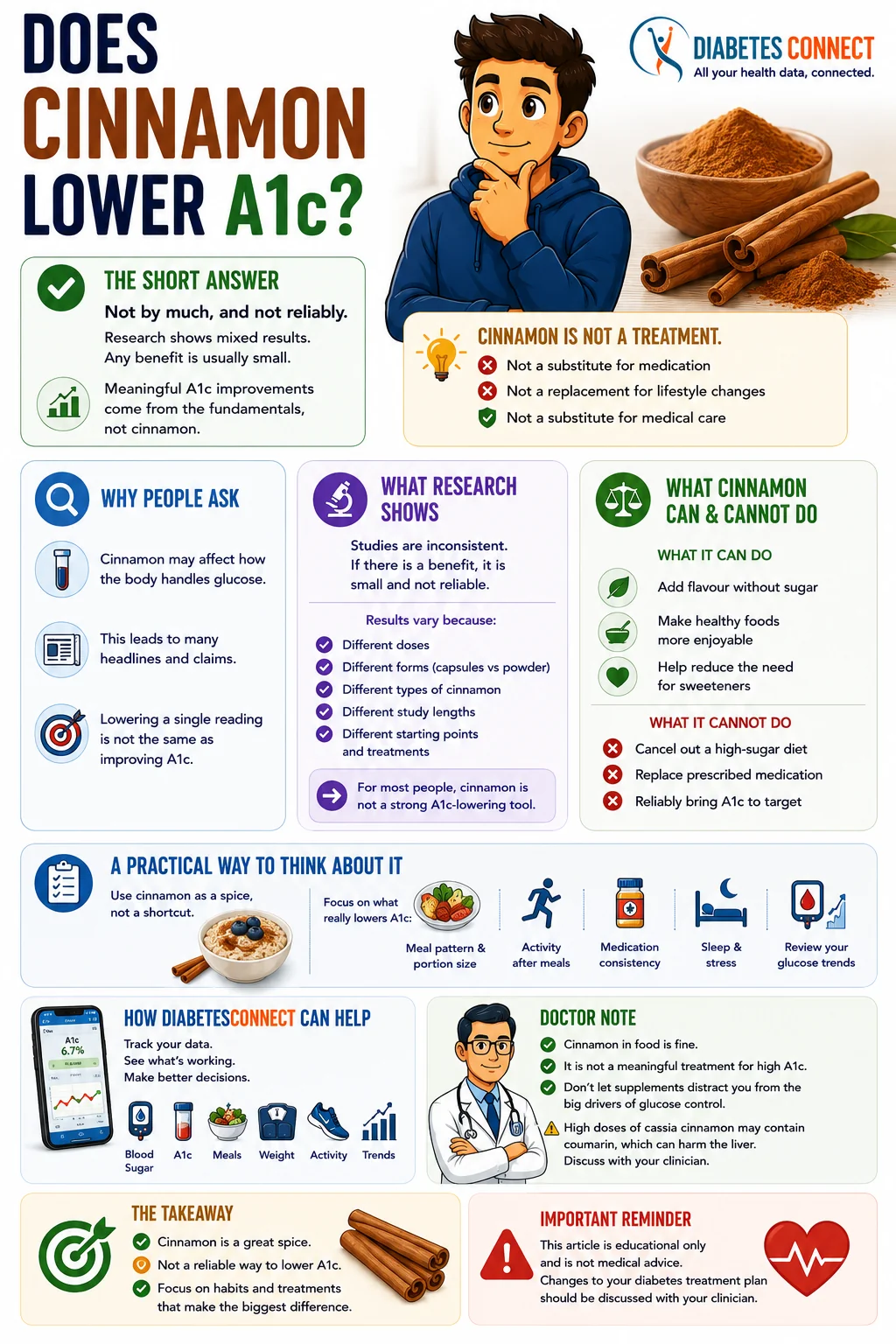
Short answer: not reliably.
Some studies suggest cinnamon has a small effect on blood sugar in people with type 2 diabetes. But the results are inconsistent, and any A1c change is usually modest.
Why this matters: A1c reflects your average blood sugar over about 3 months. If your goal is to lower A1c in a meaningful way, cinnamon is not one of the tools that moves the needle much.
Why the answer is not straightforward
Cinnamon gets a lot of attention because it is easy to add to food, cheap, and often marketed as a “natural” blood sugar fix.
The problem: research does not show a clear, dependable A1c benefit.
Some studies find a small drop in fasting glucose or A1c. Others show little difference. When reviews combine multiple studies, the overall takeaway is usually the same: if cinnamon helps, the effect is small and not consistent enough to treat it as a core diabetes strategy.
Why study results vary
The studies on cinnamon are hard to compare.
Common differences include:
- different doses
- powder versus capsules
- different cinnamon types
- short study durations
- different starting A1c levels
- different diabetes treatment plans
That is why you will see headlines claiming cinnamon lowers blood sugar, while the real-world answer is much less clear.
Also worth noting: lowering one blood sugar reading is not the same as lowering A1c. A1c improves when your glucose is better controlled over time, not just on one day or after one meal.
What cinnamon can do — and what it cannot
Cinnamon can be useful as a food ingredient.
It can:
- add flavor without added sugar
- make plain yogurt, oats, fruit, or coffee more satisfying
- help some people cut back on sweeteners
It cannot:
- offset a high-carb or high-sugar eating pattern
- replace diabetes medication
- reliably bring a high A1c back to target
A practical example: cinnamon on oatmeal is fine. But if the meal still causes a glucose spike because of portion size, added sugar, or low protein, the cinnamon does not fix that.
What to focus on instead if you want to lower A1c
If your goal is a better A1c, focus on the changes that consistently matter more:
- your usual carb pattern and portions
- medication consistency
- activity, especially after meals
- weight changes when relevant
- sleep and stress habits
- checking glucose trends instead of guessing
This is where tracking helps. In DiabetesConnect, you can log blood sugar, meals, weight, blood pressure, and HbA1c in one place. That makes it easier to see whether a change in your routine is actually helping, instead of relying on supplement claims.
Doctor note
I do not usually tell patients to avoid cinnamon in food. I do tell them not to expect it to meaningfully lower A1c.
Be more careful with cinnamon supplements than with normal culinary use. Some forms, especially cassia cinnamon, contain coumarin, which can be harmful to the liver in high amounts. If you are thinking about taking cinnamon capsules regularly, discuss it with your clinician first.
Bottom line
Cinnamon is fine as a spice. It is not a reliable A1c-lowering treatment.
If your A1c is above target, put your effort into the habits and treatments with a clearer payoff: food pattern, medication adherence, activity, and reviewing your numbers over time.
This article is educational only and is not medical advice. Do not change your diabetes treatment plan without speaking with your clinician.
Part of guide
HbA1c Guide
Read practical DiabetesConnect guides on HbA1c meaning, result ranges, and how HbA1c fits with daily glucose review.
Open topic hubMake the next step easier
Keep the useful bits from this guide in one place.
Track meals, blood sugar, weight, and diabetes trends together so your notes are easier to understand at the next appointment.