By Dr Ryizan Nizar MD, MRCP UK (Diabetes and Endocrinology), CCT
Last updated 12 June 2026
7 Fruits People With Diabetes Should Understand (and Portion Carefully)
Learn 7 fruits people with diabetes can enjoy, how much to eat, and why portion size matters for blood sugar.
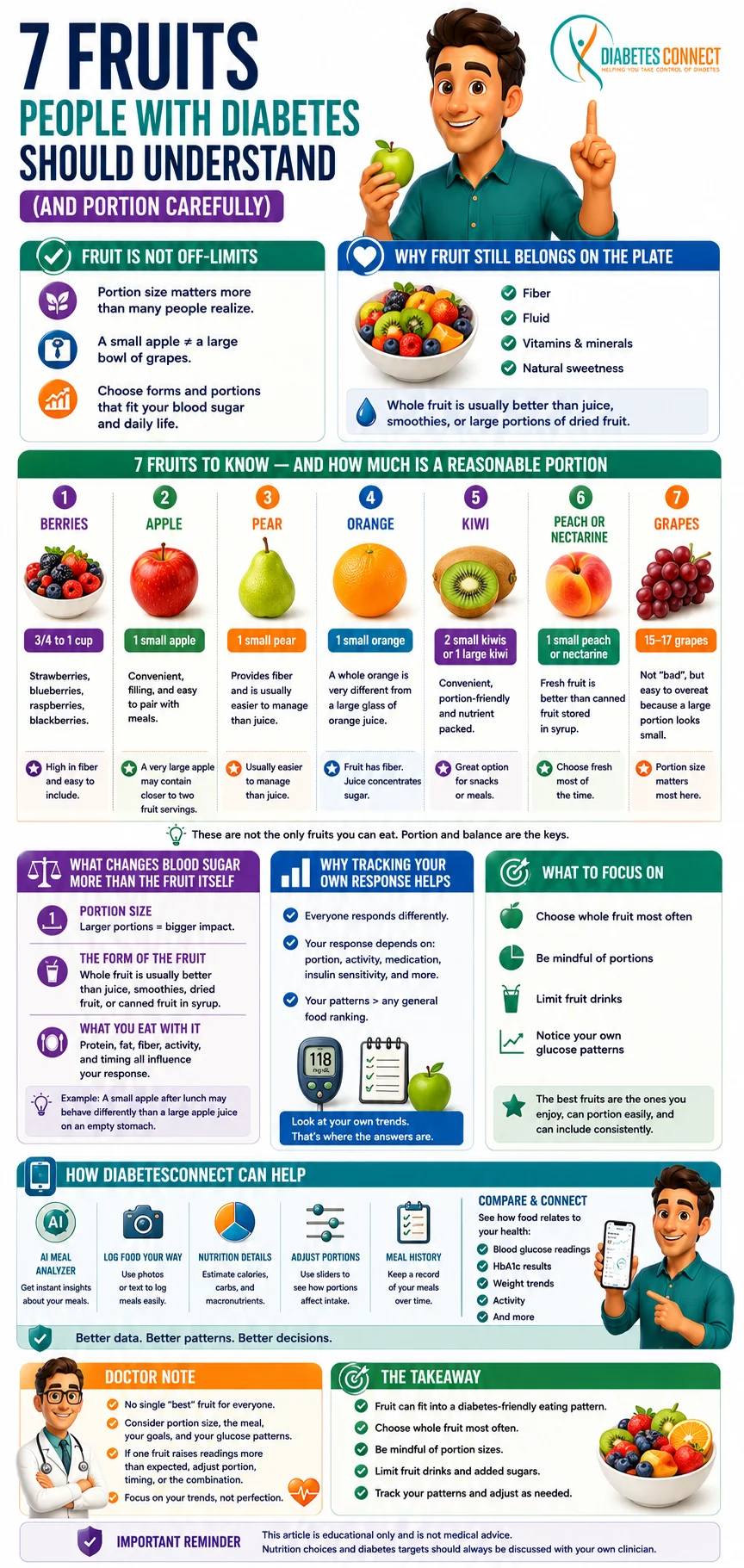
Fruit is not off-limits with diabetes.
But portion size matters more than many people realize.
A small apple and a large bowl of grapes are both “fruit,” but they can affect blood sugar very differently.
The goal is not to fear fruit. It is to choose forms and portions that are easier to fit into everyday life.
Why fruit still belongs on the plate
Whole fruit provides:
- fiber
- fluid
- vitamins and minerals
- natural sweetness
For most people with diabetes, the better question is not:
“Can I eat fruit?”
It is:
“Which fruit works well for me, and what portion makes sense?”
Fruit contains carbohydrates, so the amount you eat and how it fits with the rest of your meal matters.
Whole fruit is usually a better choice than fruit juice, sugary smoothies, or large portions of dried fruit because it keeps more of the natural structure and fiber.
7 fruits to know — and how much is a reasonable portion
These are not the only fruits people with diabetes can eat.
They are simply common choices that are usually easier to portion and include in a balanced routine.
1. Berries
A practical portion is around:
- 3/4 to 1 cup of berries
Examples include:
- strawberries
- blueberries
- raspberries
- blackberries
Berries provide fiber and are often easier to include as part of breakfast or a snack.
2. Apple
A reasonable portion is:
- 1 small apple
Apples are convenient, filling, and easy to pair with meals.
A very large apple may contain closer to two fruit servings.
3. Pear
A practical portion is:
- 1 small pear
Like apples, pears provide fiber and are usually easier to manage than fruit juice or fruit packed in syrup.
4. Orange
A common portion is:
- 1 small orange
A whole orange is very different from a large glass of orange juice.
The fruit contains fiber, while juice concentrates the sugar and makes it easier to consume a larger amount quickly.
5. Kiwi
A practical portion is:
- 2 small kiwis or 1 large kiwi
Kiwi can be a convenient, portion-friendly fruit choice.
6. Peach or nectarine
A typical portion is:
- 1 small peach or nectarine
Fresh fruit is usually a better everyday option than canned fruit stored in syrup.
7. Grapes
A practical portion is around:
- 15–17 grapes
Grapes are not “bad,” but they are easy to overeat because a large portion does not always look large in a bowl.
They are a good example of why portion size matters.
What changes blood sugar more than the fruit itself
The response to fruit is not only about the fruit type.
Three things usually matter most.
1. Portion size
Even nutritious foods can affect blood sugar more when the serving becomes much larger.
2. The form of the fruit
Whole fruit is usually easier to manage than:
- juice
- sweetened smoothies
- dried fruit in large portions
- canned fruit in syrup
3. What you eat with it
Fruit eaten as part of a balanced meal may affect glucose differently compared with fruit eaten alone.
Protein, fat, fiber, activity, and timing can all influence the response.
A simple example:
A small apple after lunch may behave differently from drinking a large apple juice on an empty stomach.
Why tracking your own response helps
There is no single fruit ranking that works perfectly for everyone.
Your response can depend on:
- portion size
- activity
- medication
- insulin sensitivity
- the rest of the meal
Looking at your own patterns is usually more useful than following a strict “good fruit vs bad fruit” list.
How DiabetesConnect can help
DiabetesConnect can help you understand how different foods affect your own patterns.
You can:
- analyze meals with the AI Meal Analyzer
- log food from photos or text
- estimate calories and carbohydrates
- review macronutrients
- adjust portions with sliders
- track meal history
You can also compare food choices with:
- blood glucose readings
- HbA1c results
- weight trends
- activity
- wider health patterns
This makes it easier to understand your personal response instead of guessing.
Doctor note
There is no single “best” fruit for every person with diabetes.
Fruit choices should be considered alongside:
- portion size
- the rest of the meal
- glucose patterns
- personal health goals
If one fruit raises your readings more than expected, it does not mean fruit as a category is the problem.
It may simply mean the portion, timing, or combination needs adjusting.
Takeaway
Fruit can absolutely fit into a diabetes-friendly eating pattern.
The easiest approach is usually:
- choose whole fruit most often
- be mindful of portions
- limit fruit drinks
- notice your own glucose patterns
The best fruits are usually the ones you enjoy, can portion easily, and can include consistently.
Important reminder
This article is educational only and is not medical advice. Nutrition choices and diabetes targets should always be discussed with your own clinician.
Part of guide
Diabetes Food Guide
Browse diabetes food guides covering fruit, drinks, protein, meal choices, and what to watch for in day-to-day eating.
Open topic hubMake the next step easier
Keep the useful bits from this guide in one place.
Track meals, blood sugar, weight, and diabetes trends together so your notes are easier to understand at the next appointment.