By Dr Ryizan Nizar MD, MRCP UK (Diabetes and Endocrinology), CCT
Last updated 15 June 2026
Are Eggs Good for Diabetes?
Eggs are low in carbs and usually do not raise blood sugar much. Learn the benefits, limits, and best ways to include eggs in a diabetes-friendly diet.
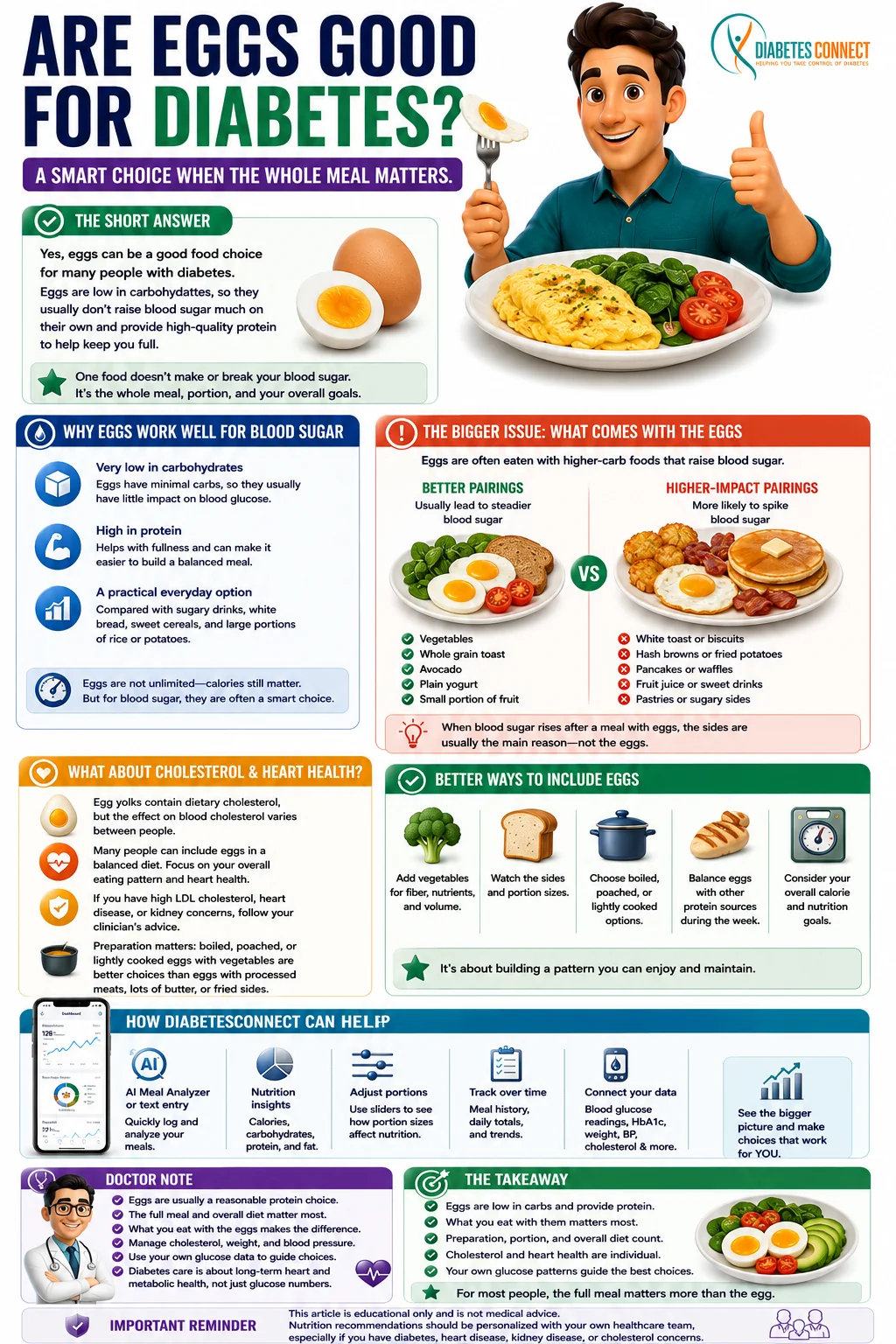
The short answer
Yes, eggs can be a good food choice for many people with diabetes.
Eggs are naturally low in carbohydrates, so they usually do not raise blood sugar much on their own. They also provide protein, which can help make meals more filling.
The important point: with diabetes, the question is rarely about one food by itself. It is about the whole meal, portion sizes, and your overall health goals.
Why eggs usually work well for blood sugar
A plain egg contains very little carbohydrate.
That means it usually has much less direct impact on blood glucose compared with foods such as:
- sugary drinks
- white bread
- sweet cereals
- large portions of rice or potatoes
Eggs also provide protein, which can help with fullness and may make it easier to build a more balanced meal.
That does not mean eggs are unlimited or that calories no longer matter.
It simply means that from a blood sugar perspective, eggs are often a practical option.
The bigger issue: what comes with the eggs
Eggs are often eaten with foods that have a bigger effect on blood sugar.
Common examples include:
- white toast
- hash browns
- pancakes
- sweet coffee drinks
- fruit juice
- pastries
So when a meal containing eggs leads to a glucose rise, the eggs are often not the main reason.
A breakfast of eggs with vegetables and a small portion of whole grain bread can affect blood sugar very differently from eggs served with fried potatoes, juice, and a large refined carbohydrate portion.
The full plate matters.
What about cholesterol and heart health?
This is where the answer becomes more individual.
Many people with diabetes also need to think about:
- cholesterol levels
- blood pressure
- heart health
- kidney health
Egg yolks contain dietary cholesterol, but the effect of eggs on blood cholesterol varies between people.
For many people, eggs can still fit into a balanced eating pattern.
However, if you have high LDL cholesterol, cardiovascular disease, or specific dietary advice from your clinician, it is worth looking at your overall diet rather than focusing only on eggs.
Preparation also matters.
For example, boiled eggs or a vegetable omelet create a different overall meal compared with eggs regularly served with processed meats, large amounts of butter, or high-saturated-fat sides.
Better ways to include eggs in a diabetes-friendly meal
Simple changes can make the overall meal more balanced:
- add vegetables for extra fiber and volume
- pay attention to the sides
- choose boiled, poached, or lightly cooked options more often
- balance eggs with other protein sources during the week
- consider your overall calorie and nutrition goals
The goal is not a perfect single meal.
The goal is a pattern you can maintain.
How DiabetesConnect can help
Different people respond differently to meals.
DiabetesConnect can help you understand your own patterns by allowing you to track:
- meals using the AI Meal Analyzer or text entry
- calories and macronutrients
- carbohydrates, protein, and fat
- portion adjustments
- blood glucose readings
- HbA1c results
- weight trends
- cholesterol records
- blood pressure
Keeping food and health data together makes it easier to understand how your overall eating pattern affects your diabetes management.
Doctor note
Eggs are usually a reasonable protein choice for many people with diabetes.
The mistake is looking at eggs alone.
In clinic, the bigger picture usually matters more:
- What is eaten with the eggs?
- What does the overall diet look like?
- Are cholesterol and cardiovascular risks being managed?
- Does the meal pattern fit the person?
Diabetes care is not only about glucose numbers. Long-term heart and metabolic health matter too.
Takeaway
Eggs can fit well into a diabetes-friendly diet because they are low in carbohydrates and provide protein.
The biggest factors are usually:
- what you eat with them
- how they are prepared
- your cholesterol and heart-health goals
- your overall eating pattern
For most people, the full meal matters more than the egg itself.
Important reminder
This article is educational only and is not medical advice. Nutrition recommendations should be personalized with your own healthcare team, especially if you have diabetes, heart disease, kidney disease, or cholesterol concerns.
Part of guide
Diabetes Food Guide
Browse diabetes food guides covering fruit, drinks, protein, meal choices, and what to watch for in day-to-day eating.
Open topic hubMake the next step easier
Keep the useful bits from this guide in one place.
Track meals, blood sugar, weight, and diabetes trends together so your notes are easier to understand at the next appointment.