By Dr Ryizan Nizar MD, MRCP UK (Diabetes and Endocrinology), CCT
Last updated 25 July 2026
Are Bananas OK for People With Diabetes?
Bananas can fit into a diabetes-friendly eating plan. Learn how ripeness, portion size, and pairing with protein or fat affect blood sugar.
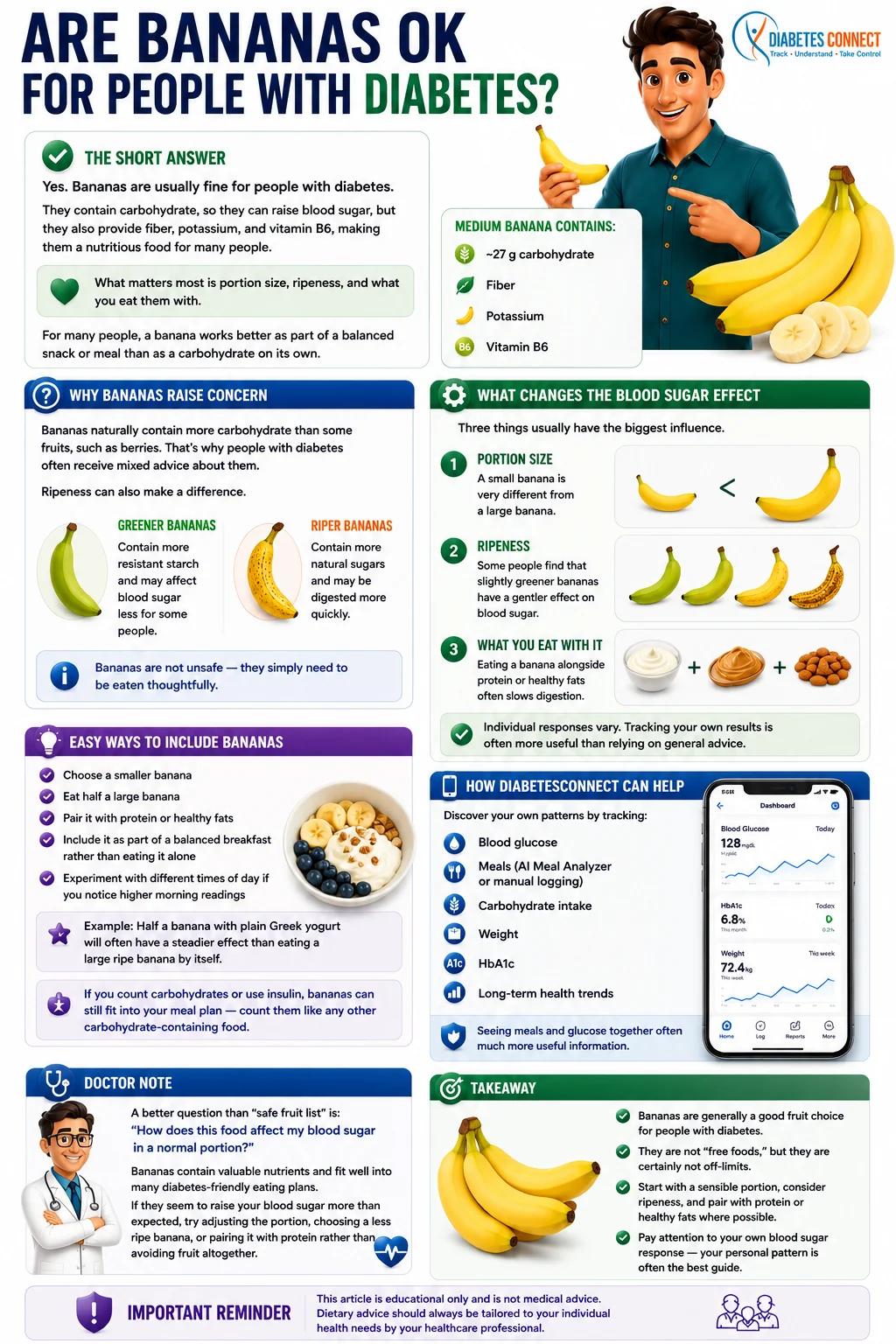
The short answer
Yes. Bananas are usually fine for people with diabetes.
They are not a “bad” fruit, and they do not need to be automatically avoided. Bananas contain carbohydrate, so they can raise blood sugar, but they also provide fiber, potassium, and vitamin B6, making them a nutritious food for many people.
What matters most is portion size, ripeness, and what you eat them with.
For many people, a banana works better as part of a balanced snack or meal than as a carbohydrate on its own.
Why bananas raise concern
Bananas naturally contain more carbohydrate than some fruits, such as berries. That is why people with diabetes often receive mixed advice about them.
A medium banana contains enough carbohydrate to affect blood sugar, but that does not make it unhealthy. It simply means it should be considered as part of your overall carbohydrate intake.
Ripeness can also make a difference.
Greener bananas contain more resistant starch, while riper bananas contain more natural sugars and may be digested more quickly. For some people, a very ripe banana may produce a larger rise in blood sugar than a firmer banana, although responses vary between individuals.
The important point is that bananas are not unsafe—they simply need to be eaten thoughtfully.
What changes the blood sugar effect
Three things usually have the biggest influence.
- Portion size
A small banana is very different from a large banana.
If bananas seem to raise your blood sugar more than expected, reducing the portion is often the simplest adjustment.
- Ripeness
Some people find that slightly greener bananas have a gentler effect on blood sugar than very ripe bananas.
- What you eat with it
Eating a banana alongside protein or healthy fats often slows digestion.
Examples include:
- peanut butter
- Greek yogurt
- cottage cheese
- a handful of nuts
Many people find this leads to a steadier blood sugar response than eating a banana on its own.
Individual responses vary, which is why tracking your own results is often more useful than relying on general advice.
Easy ways to include bananas
Simple changes can make bananas fit comfortably into a diabetes-friendly eating pattern.
You could:
- choose a smaller banana
- eat half a large banana
- pair it with protein or healthy fats
- include it as part of a balanced breakfast rather than eating it alone
- experiment with different times of day if you notice higher morning readings
For example, half a banana with plain Greek yogurt will often have a steadier effect than eating a large ripe banana by itself.
If you count carbohydrates or use insulin, bananas can still fit into your meal plan—they simply need to be counted like any other carbohydrate-containing food.
How DiabetesConnect can help
Everyone responds to foods slightly differently.
DiabetesConnect makes it easier to discover your own patterns by allowing you to track:
- blood glucose
- meals using the AI Meal Analyzer or manual logging
- carbohydrate intake
- weight
- HbA1c
- long-term health trends
Seeing meals and glucose together often provides much more useful information than relying on memory alone.
Doctor note
People often ask whether there is a “safe fruit list” for diabetes.
That is usually the wrong question.
A better question is:
How does this food affect my blood sugar in a normal portion?
Bananas contain valuable nutrients and fit well into many diabetes-friendly eating plans.
If they seem to raise your blood sugar more than expected, the solution is often adjusting the portion, choosing a less ripe banana, or pairing it with protein rather than avoiding fruit altogether.
Takeaway
Bananas are generally a good fruit choice for people with diabetes.
They are not “free foods,” but they are certainly not off-limits.
Start with a sensible portion, consider ripeness, pair them with protein or healthy fats where possible, and pay attention to your own blood sugar response.
Your personal glucose pattern is often the best guide.
Important reminder
This article is educational only and is not medical advice. Dietary advice should always be tailored to your individual health needs by your healthcare professional.
Part of guide
Diabetes Food Guide
Browse diabetes food guides covering fruit, drinks, protein, meal choices, and what to watch for in day-to-day eating.
Open topic hubMake the next step easier
Keep the useful bits from this guide in one place.
Track meals, blood sugar, weight, and diabetes trends together so your notes are easier to understand at the next appointment.