By Dr Ryizan Nizar MD, MRCP UK (Diabetes and Endocrinology), CCT
Last updated 9 June 2026
AI Meal Analysis vs Manual Food Tracking: Which Is Better?
Compare AI meal analysis and manual food tracking for diabetes management. Learn when each method works best and how to balance speed with accuracy.
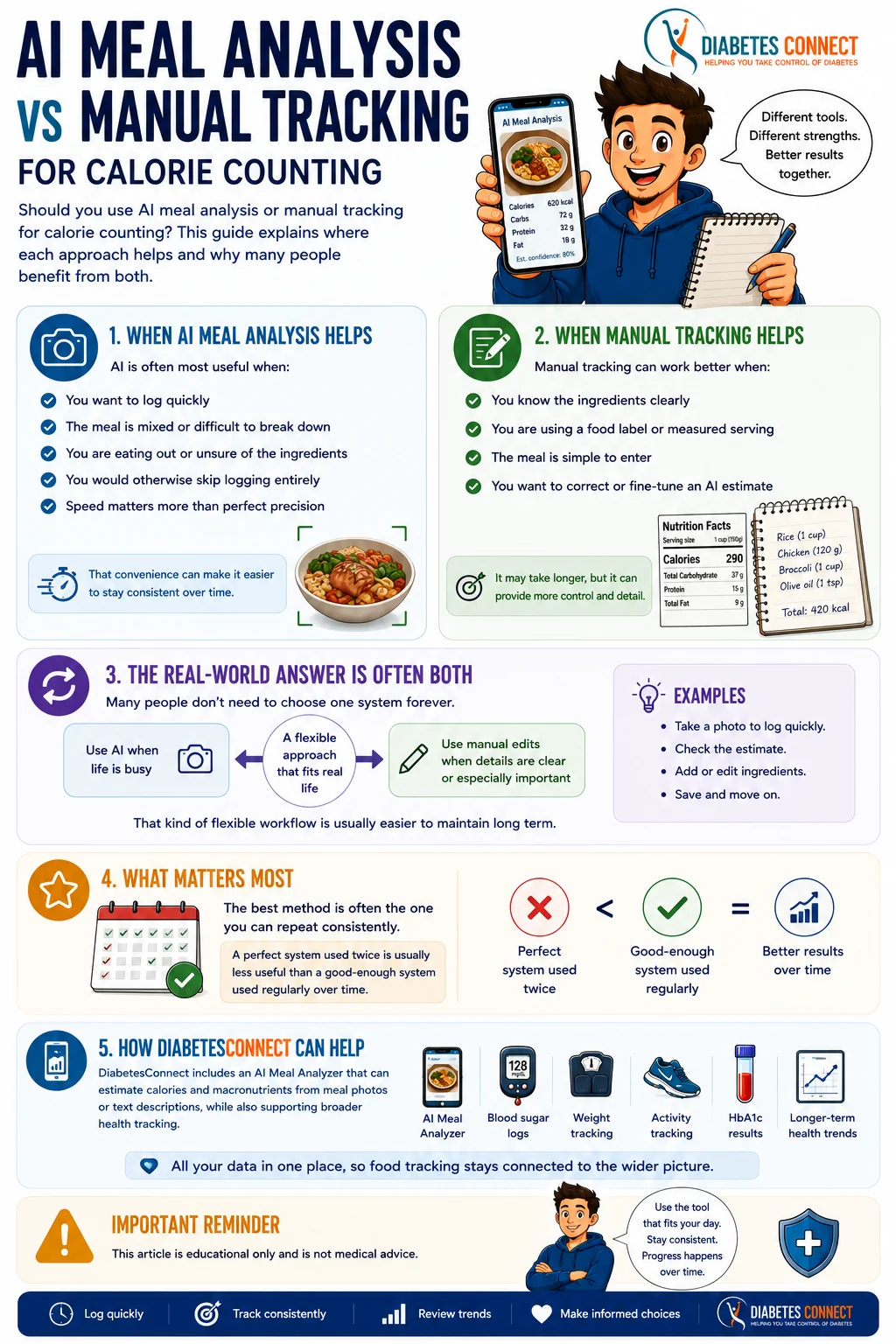
If you track food with diabetes, the real question is not which method is perfect.
It is which method helps you log meals consistently enough to notice useful patterns.
That matters because food records become more valuable when you can compare them with blood sugar, weight, activity, and longer-term health trends.
AI is best when speed keeps you consistent
AI meal analysis is useful when a meal is hard to break down or when you would otherwise skip logging.
Common examples include:
- restaurant meals
- mixed dishes like casseroles, bowls, or pasta
- meals without a nutrition label
- busy days when you need a fast estimate
The main advantage is speed.
AI can quickly estimate:
- calories
- carbohydrates
- protein
- fat
- overall nutrition patterns
A quick estimate is often more useful than no record at all, especially if your goal is to understand trends rather than calculate every gram perfectly.
Manual tracking is better when you know the details
Manual food tracking works best when you can enter a meal with confidence.
That usually means:
- you have a food label
- you measured the portion
- you know the ingredients
- you want to adjust an estimate to better match what you ate
The main advantage is control.
If accuracy matters for a specific meal, manual entry or editing can help create a cleaner record.
For most people, the best approach is both
This is not an either-or decision.
A practical routine is often:
- use AI to create a quick first estimate
- review the detected foods
- adjust portions if needed
- manually correct anything obvious
That combination gives you speed when life is busy and more control when details matter.
For example:
- breakfast may be easy to repeat and adjust manually
- restaurant meals may be easier to estimate with AI
- mixed meals may benefit from a quick scan followed by small edits
This flexible approach is usually easier to maintain than trying to track every meal perfectly.
What actually matters for diabetes tracking
Food logging is most useful when it helps answer real questions:
- Which meals tend to raise blood sugar more?
- Are carbohydrate patterns changing?
- Are portion sizes increasing over time?
- Do calorie trends match weight changes?
- Do evening meals affect next-morning readings?
That is why consistency usually beats perfection.
The goal is not to create a perfect food database. The goal is to collect enough useful information to understand your patterns.
How DiabetesConnect can help
DiabetesConnect combines AI meal analysis with wider diabetes tracking.
You can:
- analyze meals from photos
- enter meals using text
- adjust portions with sliders
- review calories and macronutrients
- track daily nutrition totals
- store meal history
You can also keep food records alongside:
- blood glucose readings
- HbA1c results
- weight tracking
- blood pressure
- activity data
- health trends and graphs
This makes it easier to understand how your meals fit into the bigger picture rather than treating food tracking as a separate task.
Doctor note
Food tracking should make diabetes management easier, not more stressful.
The best system is usually the one you can continue using in real life.
A perfectly detailed food diary that lasts only a few days is often less helpful than a slightly less perfect system you can maintain for months.
If you use meal records to understand blood sugar patterns, reviewing them alongside your healthcare team can provide more personalised guidance.
Takeaway
Use AI meal analysis when speed is the difference between logging and skipping.
Use manual tracking when you know the details and want more control.
For many people, the most realistic approach is both: quick capture first, then adjust when needed.
Important reminder
This article is educational only and is not medical advice. Nutrition needs and diabetes treatment decisions should always be discussed with your own clinician.
Part of guide
AI Meal Analysis Guide
Read DiabetesConnect guides on AI meal analysis, meal-photo logging, and how nutrition estimates fit into practical tracking.
Open topic hubMake the next step easier
Keep the useful bits from this guide in one place.
Track meals, blood sugar, weight, and diabetes trends together so your notes are easier to understand at the next appointment.